The trees
The longest-lived of living things
Scots and black pines, holm oaks, Portuguese oaks, hazels, elms and service trees. The commonest trees of the area, one by one.
Trees are the living things that reach the greatest age. They may be trees, shrubs or climbing plants.
The maple
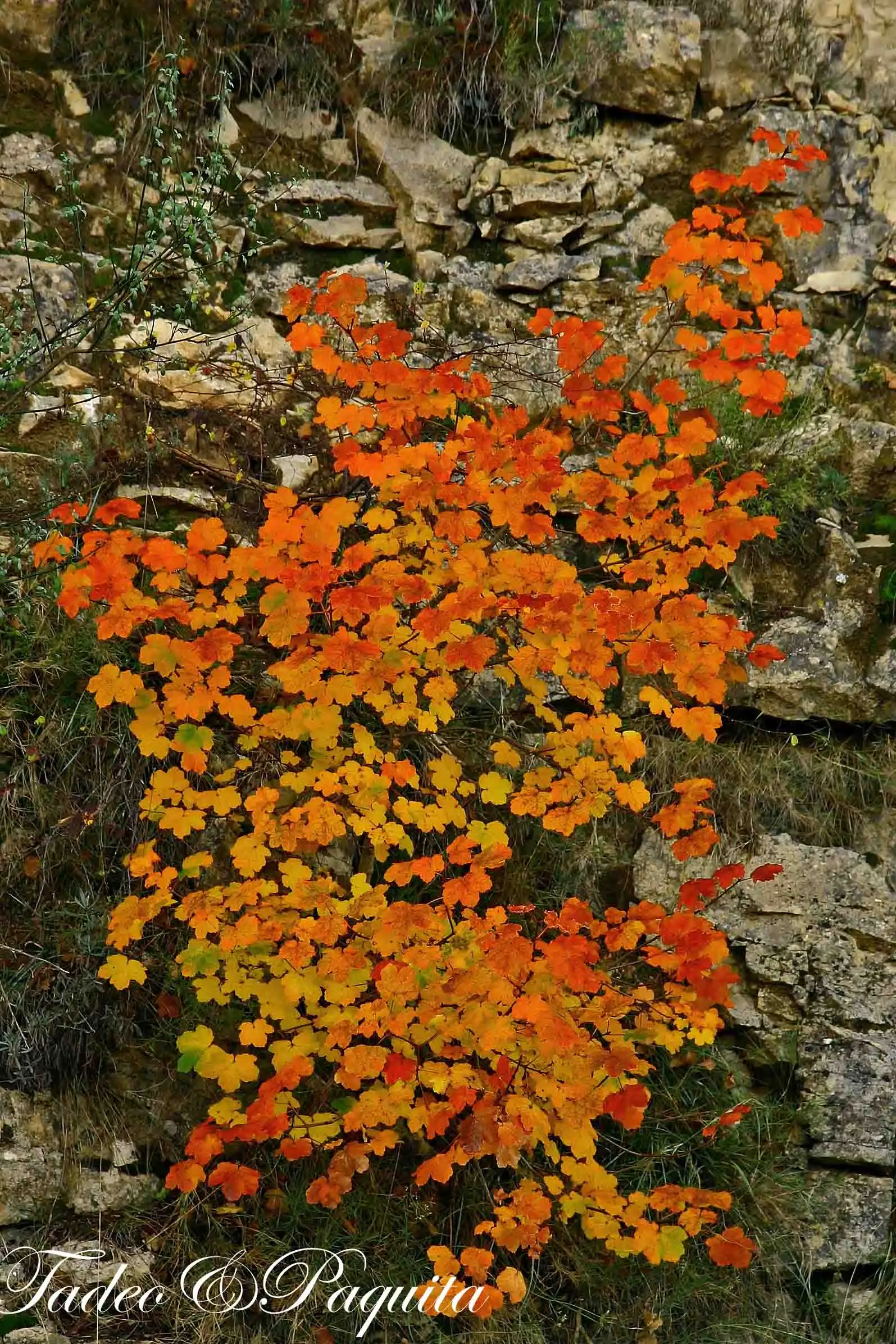
The maple grows scattered among beeches and oaks. Its wood is hard and speckled; its leaves are simple, lobed and angular. Not many are seen in this area, except near the edges of the Rambla Celumbres, among the rocks. When autumn comes, its golden colour, in various shades of ochre, makes it unmistakable.
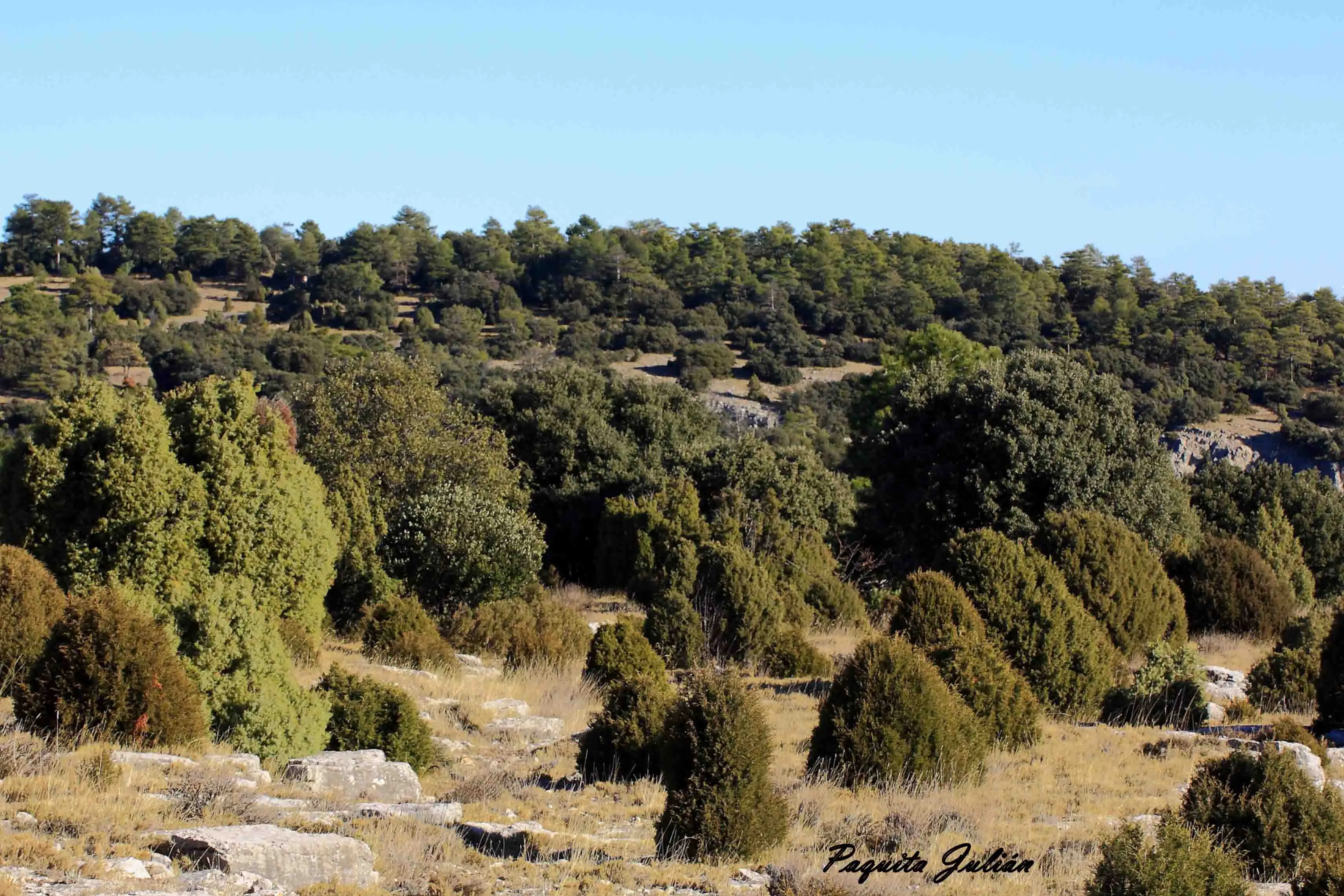
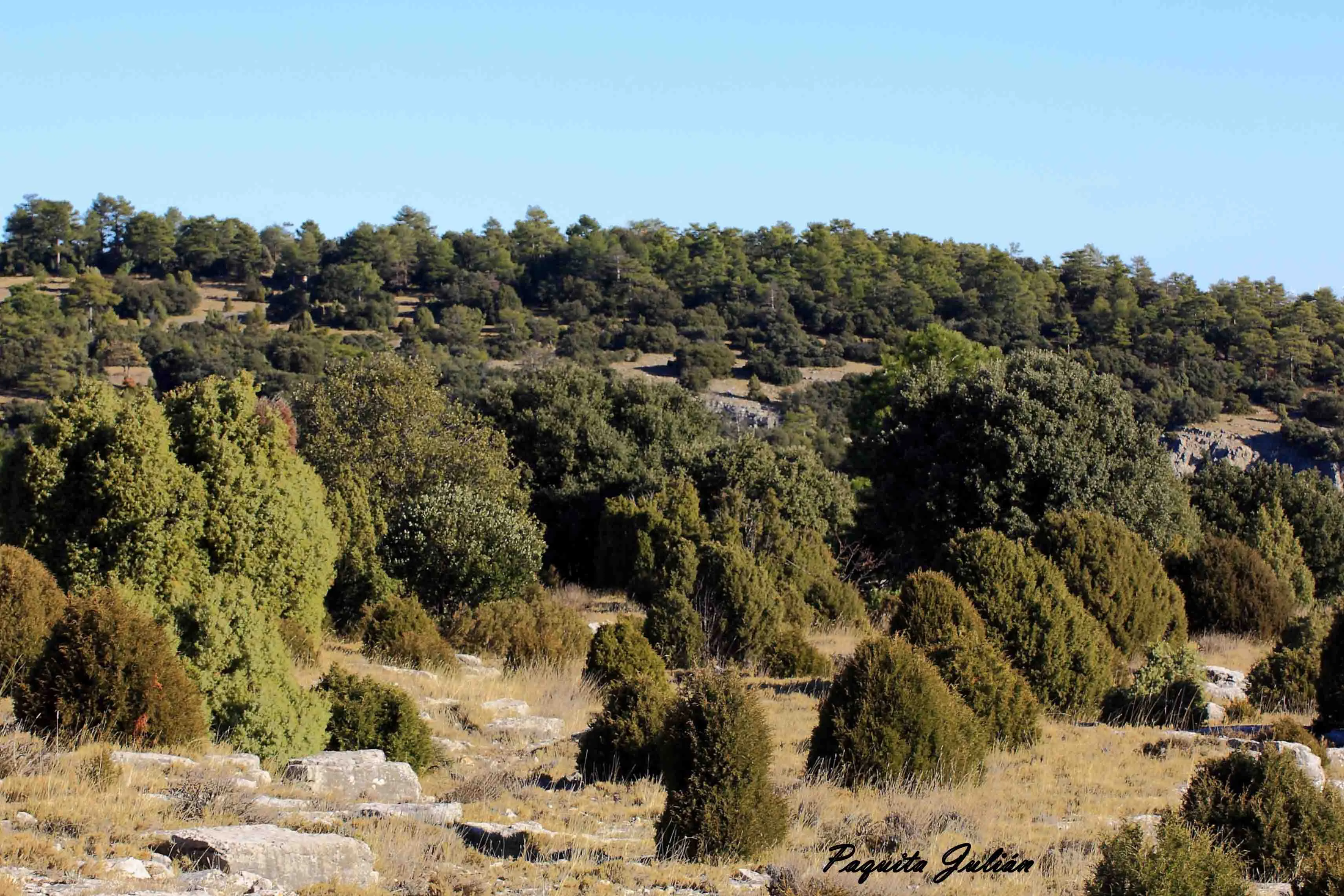
Here, in a small space, you can see the commonest trees of the area: dwarf Phoenician junipers, beside them the common juniper, holm oaks and, in the background, the pines.
Scots pine
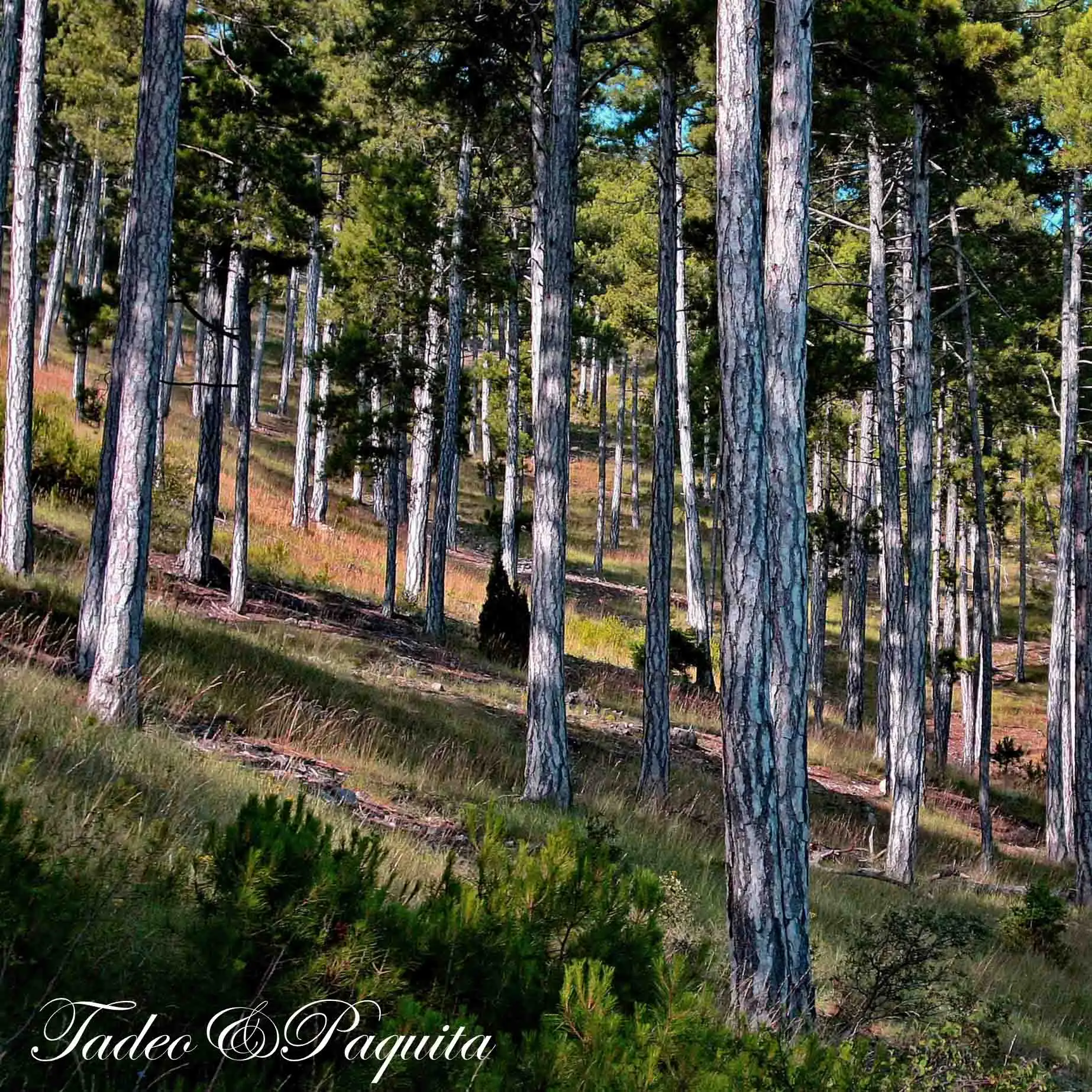
On both banks of the Rambla Celumbres, a short distance from one another, there are black pines and Scots pines. The latter grow on the lower slopes of the Roca Parda and the Roca Roja. The wood is very easy to walk through, free of undergrowth, the pines straight and in line; in autumn you can find fungi and mushrooms there. Its bark is greyish and, higher up, orange-brown.
Black pine
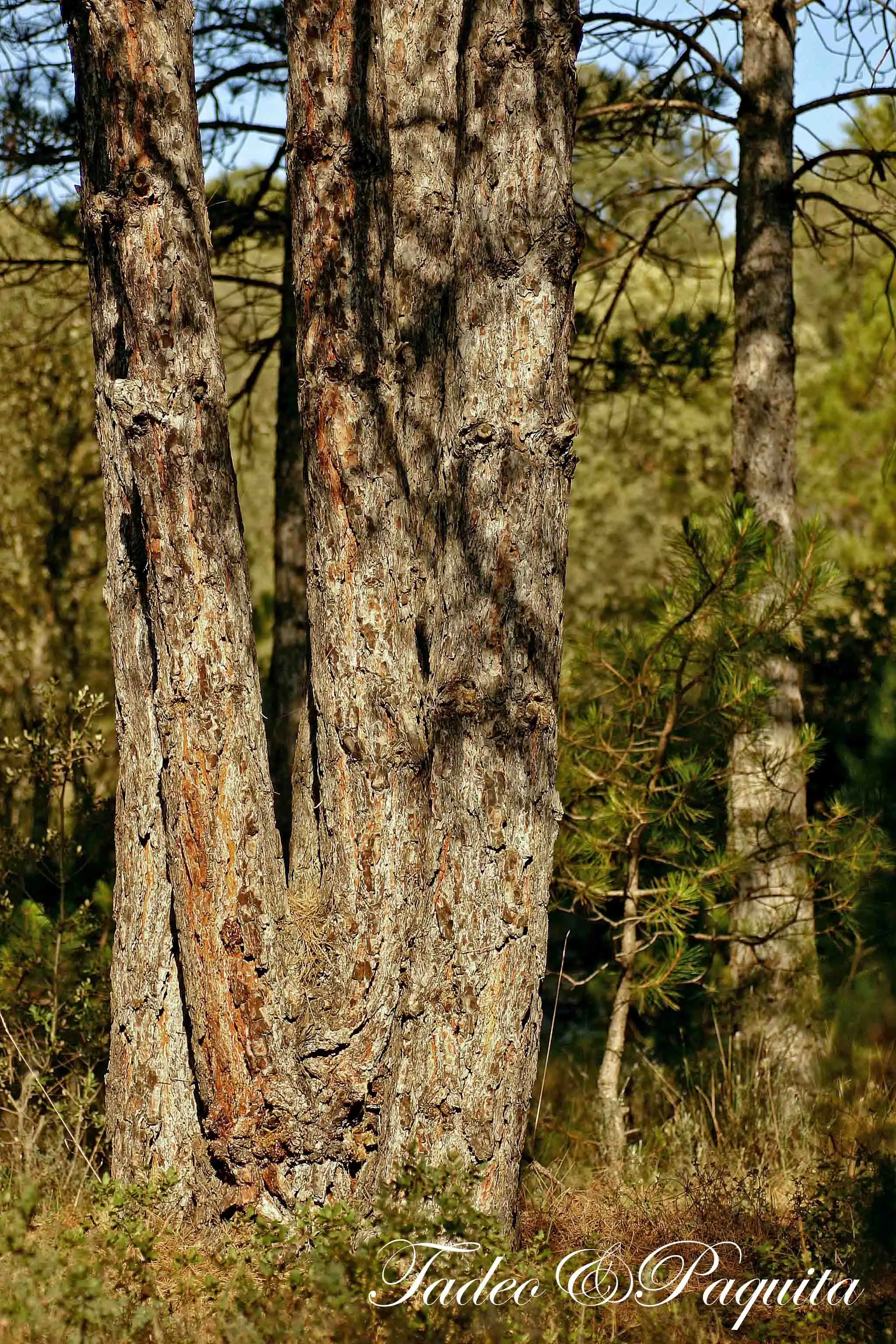
The black pine has whitish bark, denser and stronger wood, and more resin. The specimen in the photograph has five trunks joined at the base —looking through old photographs I have found three generations of my family posing beside this tree, and since childhood it has always seemed to me unchanged—. Along the same rambla there are specimens with two or three trunks, also joined at the base; the biotope of the area is probably the reason.
Holm oak
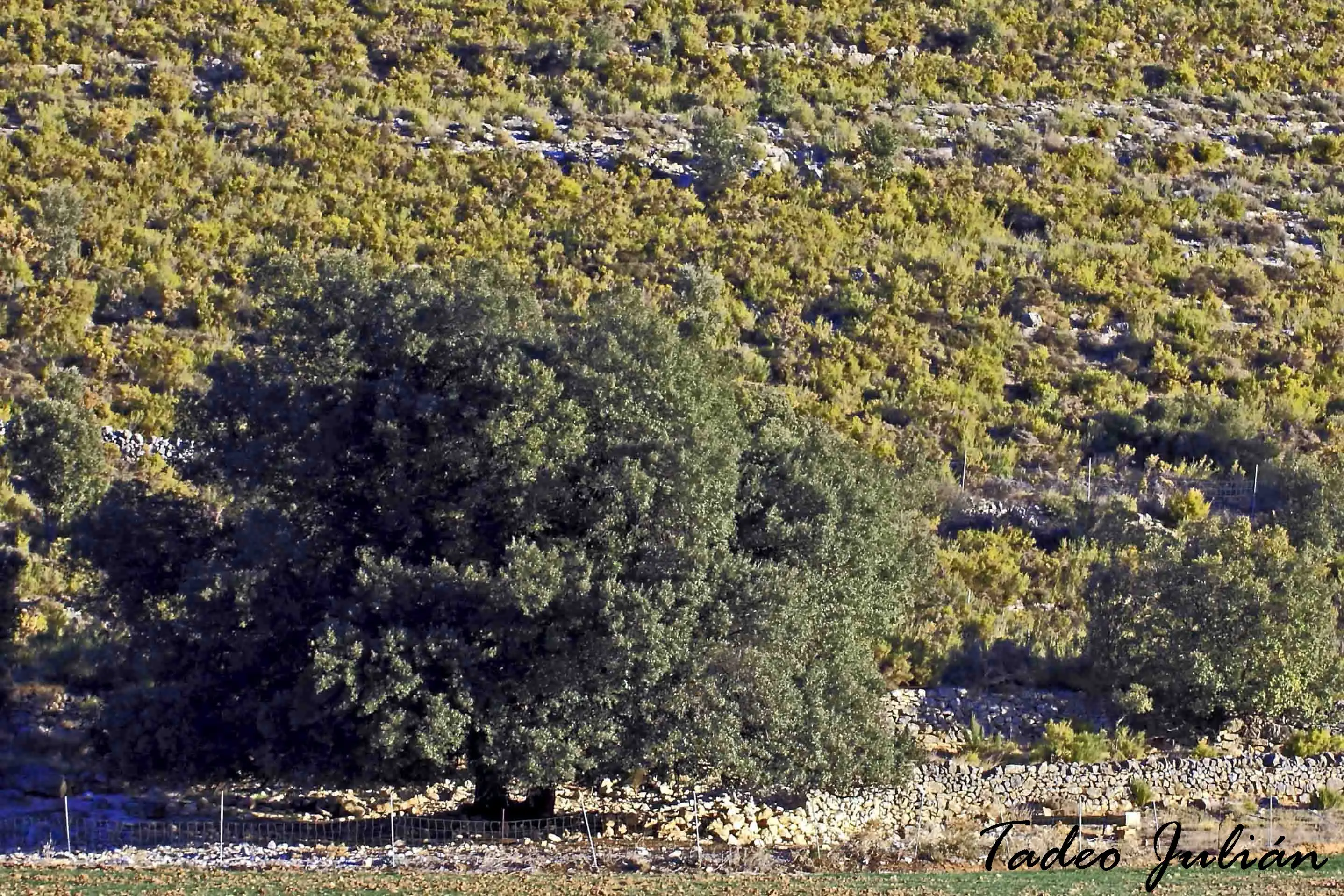
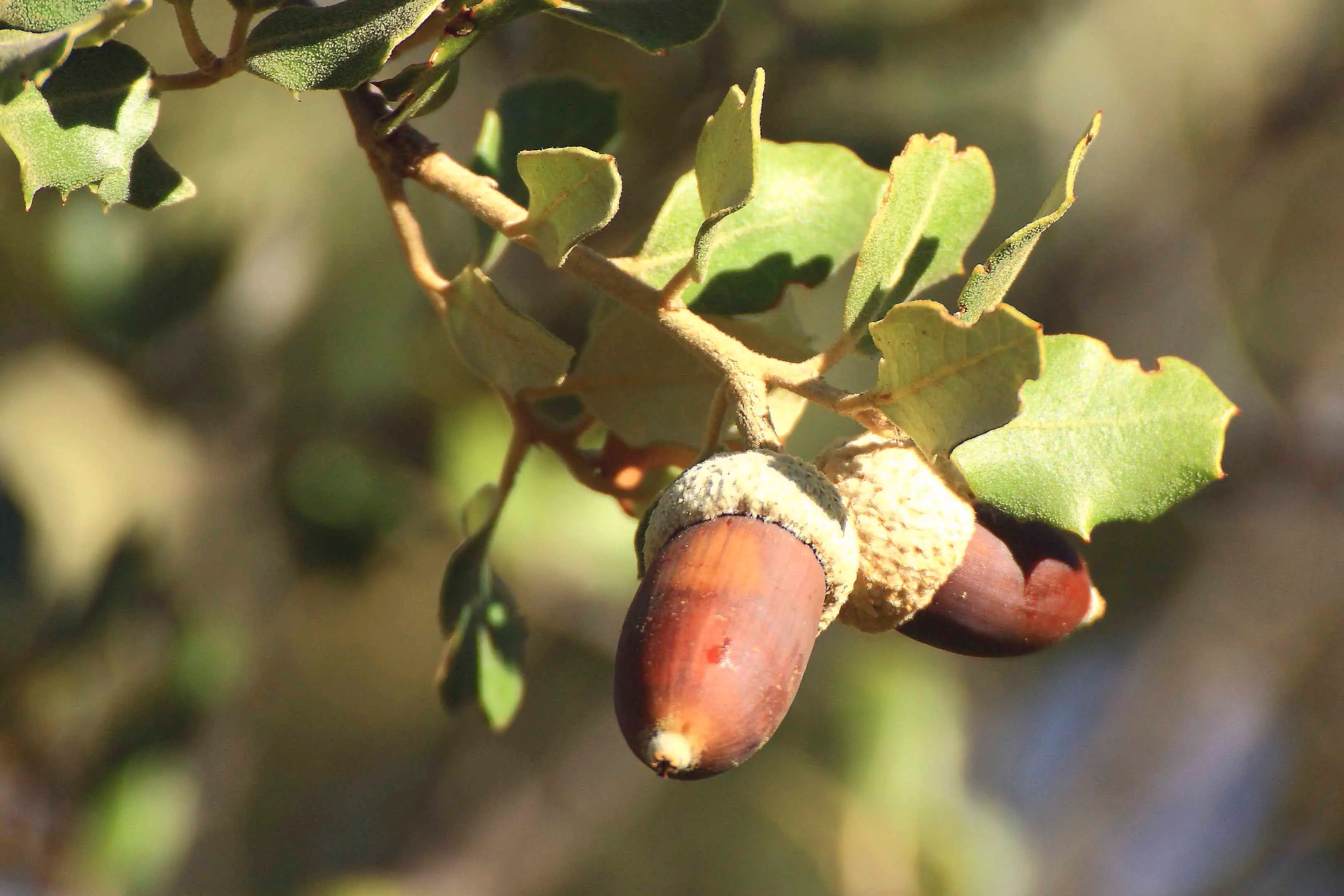
A stout, slow-growing tree. Its leaves are evergreen and spiny, though they may also be toothed or smooth-edged. The flowers are of two kinds, male and female, and both grow on the same tree: the male flowers produce the pollen and the female flowers, once pollinated, become the acorn. Holm-oak wood is hard and knotty, difficult to work; in the past it was used to make charcoal. The carrasca, the variety found here, has oval leaves, broader than the typical holm oak, and generally sweet acorns.
The acorn is the fruit of the holm oak and of the oak. It is protected by a woody cap or cupule. Ground up, the fruit gives a flour on which some peoples used to live.
Oak
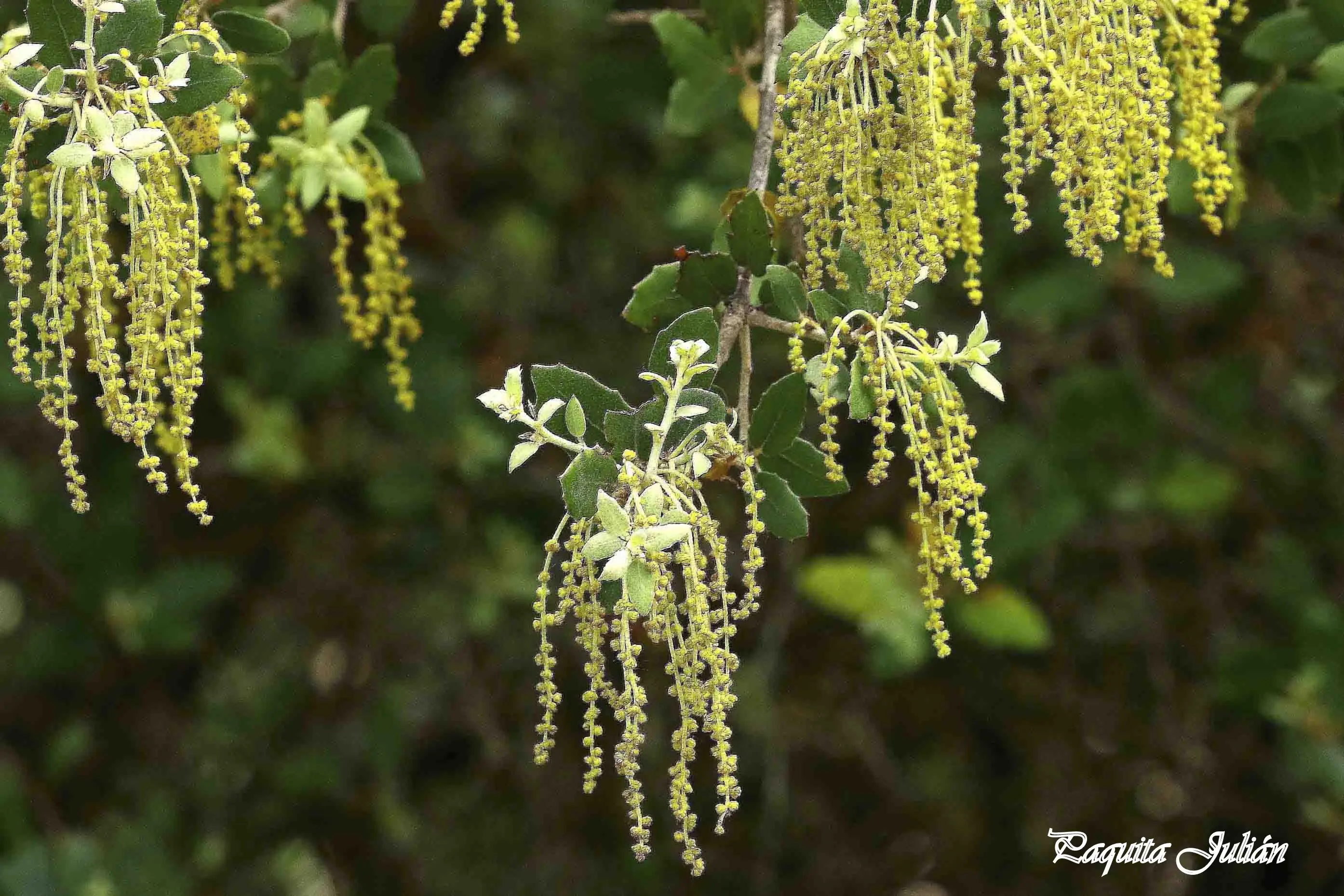
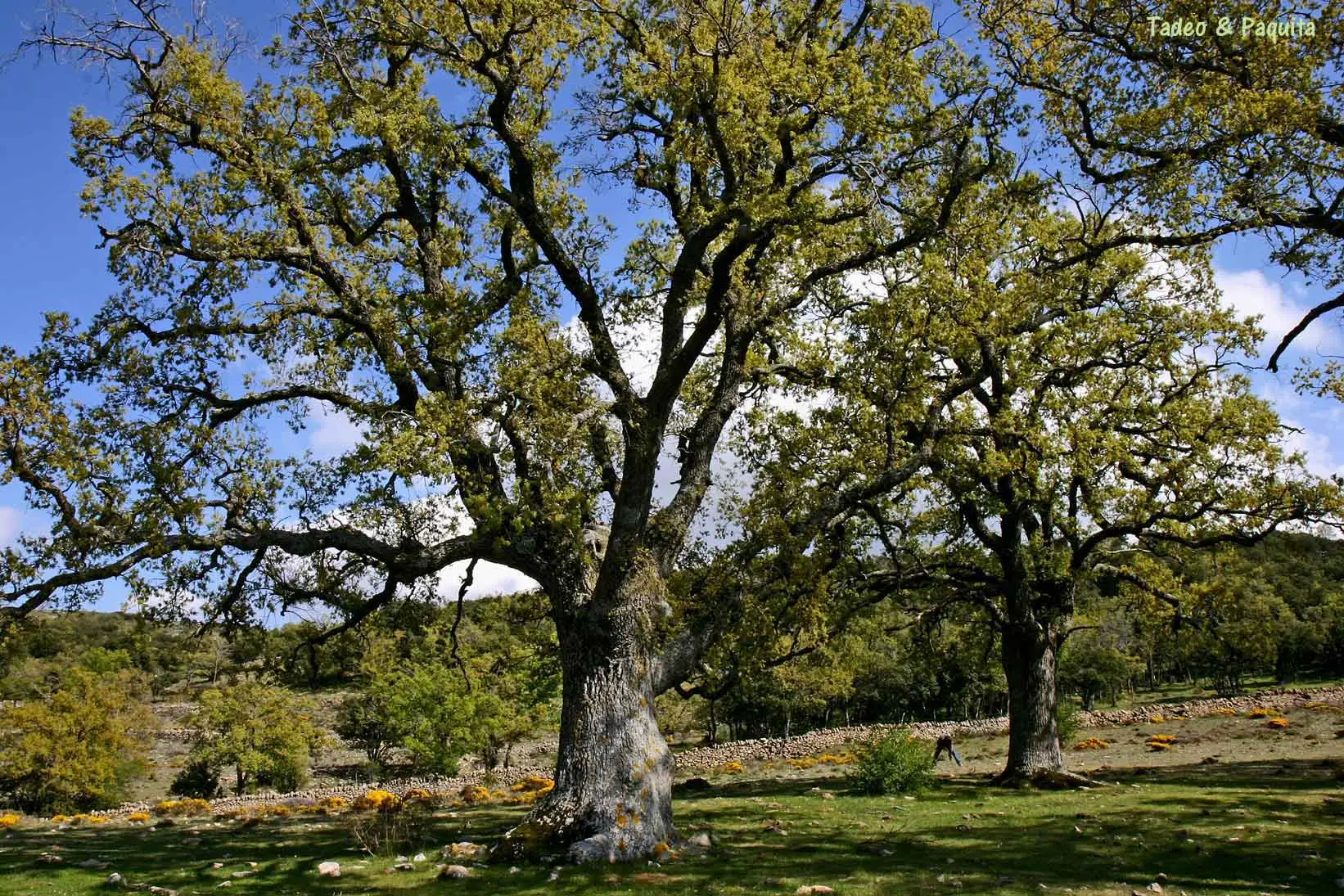
Its deciduous leaves are small and leathery, covered underneath with dense star-shaped hairs and edged with small, regular, sharp teeth. It is distinguished by its male flowers in long, hanging catkins and its solitary female flowers. Its fruit is an acorn like that of the holm oak, but with a much longer stalk joining it to the branch.
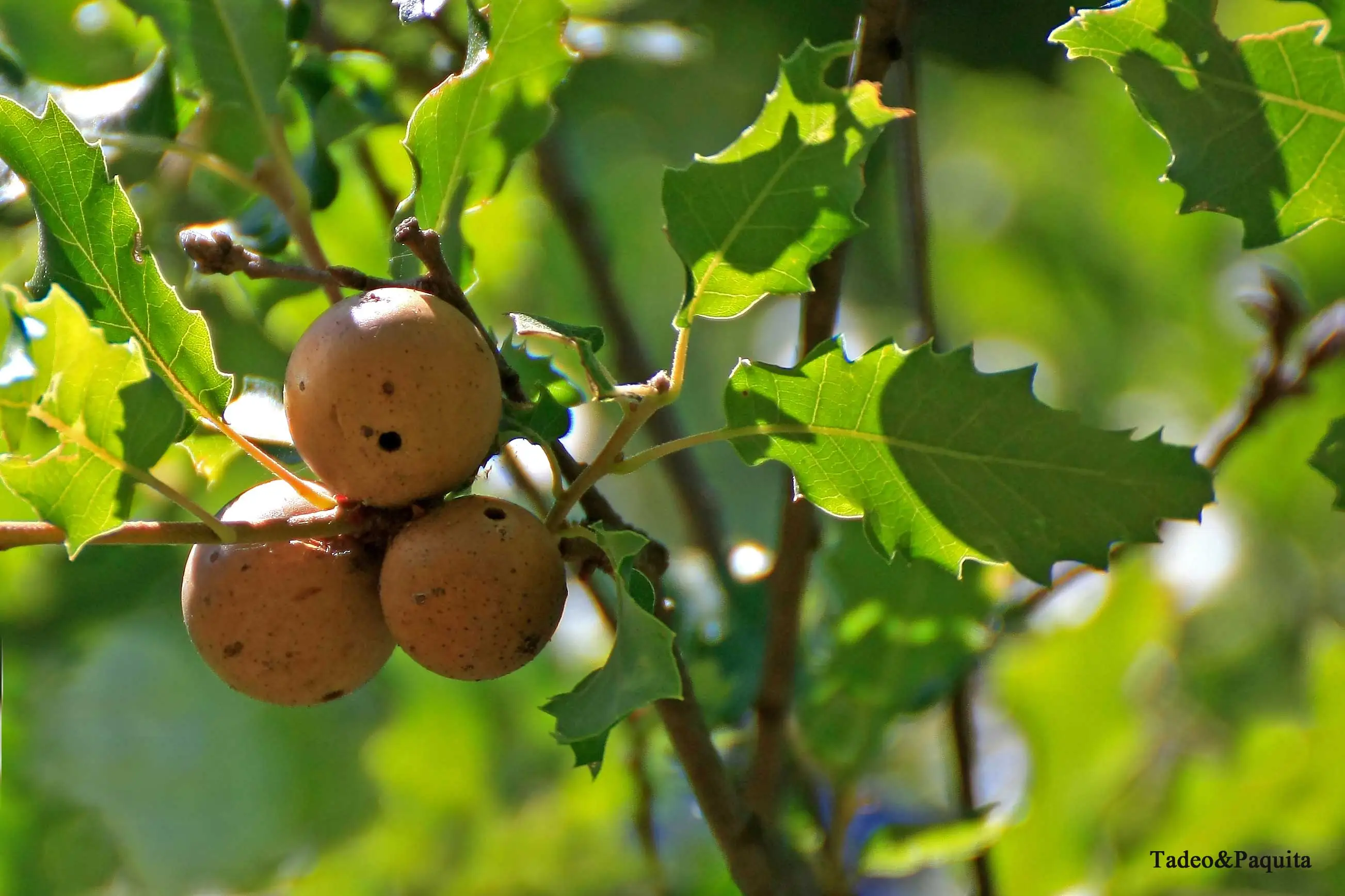
The oak has defence mechanisms against parasites. Galls are tumour-like growths of tissue that the plant produces in response to a parasite, isolating it from the rest of the plant. Galls also provide food and shelter for the parasites, generally insect larvae, allowing them to survive the leafless periods of autumn and winter.
Gall oak
A shrub, though in ideal conditions it can grow quite tall. Its bark is very rough and brown. They grow close together, forming a tangle of vegetation that is sometimes hard to get through. It is semi-evergreen, with marcescent leaves: the old ones stay on the branches until the new ones appear in spring. The leaves are elliptical with a toothed edge, always glossy on top and greyish underneath. The acorns ripen in September and grow in clusters.
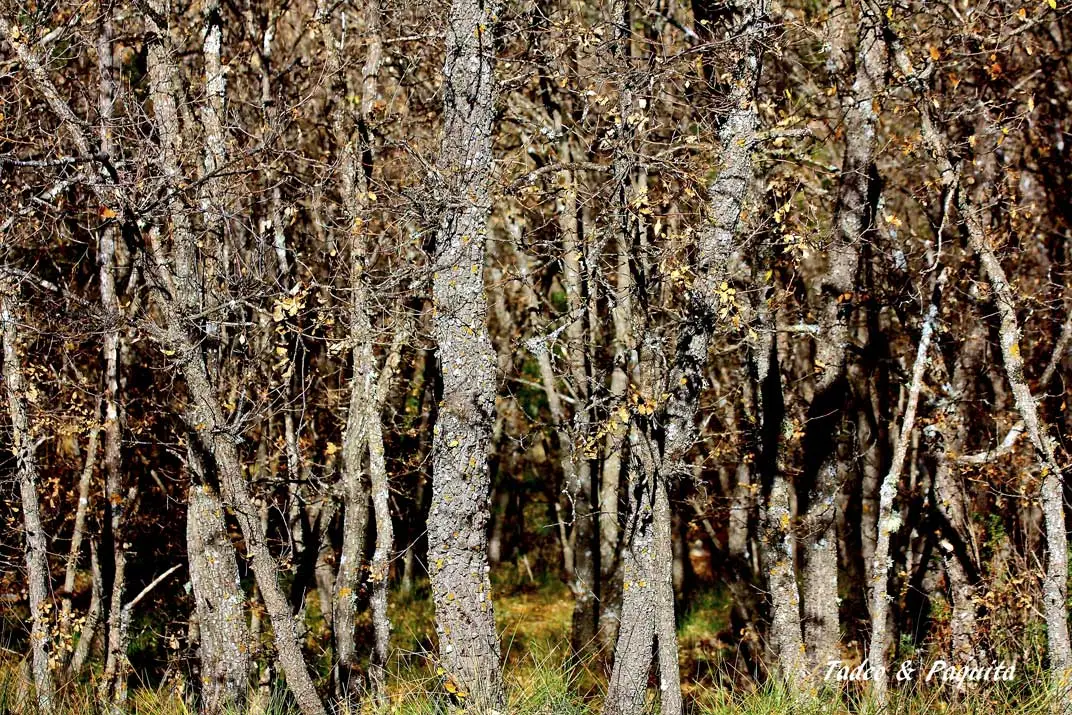
Hazel
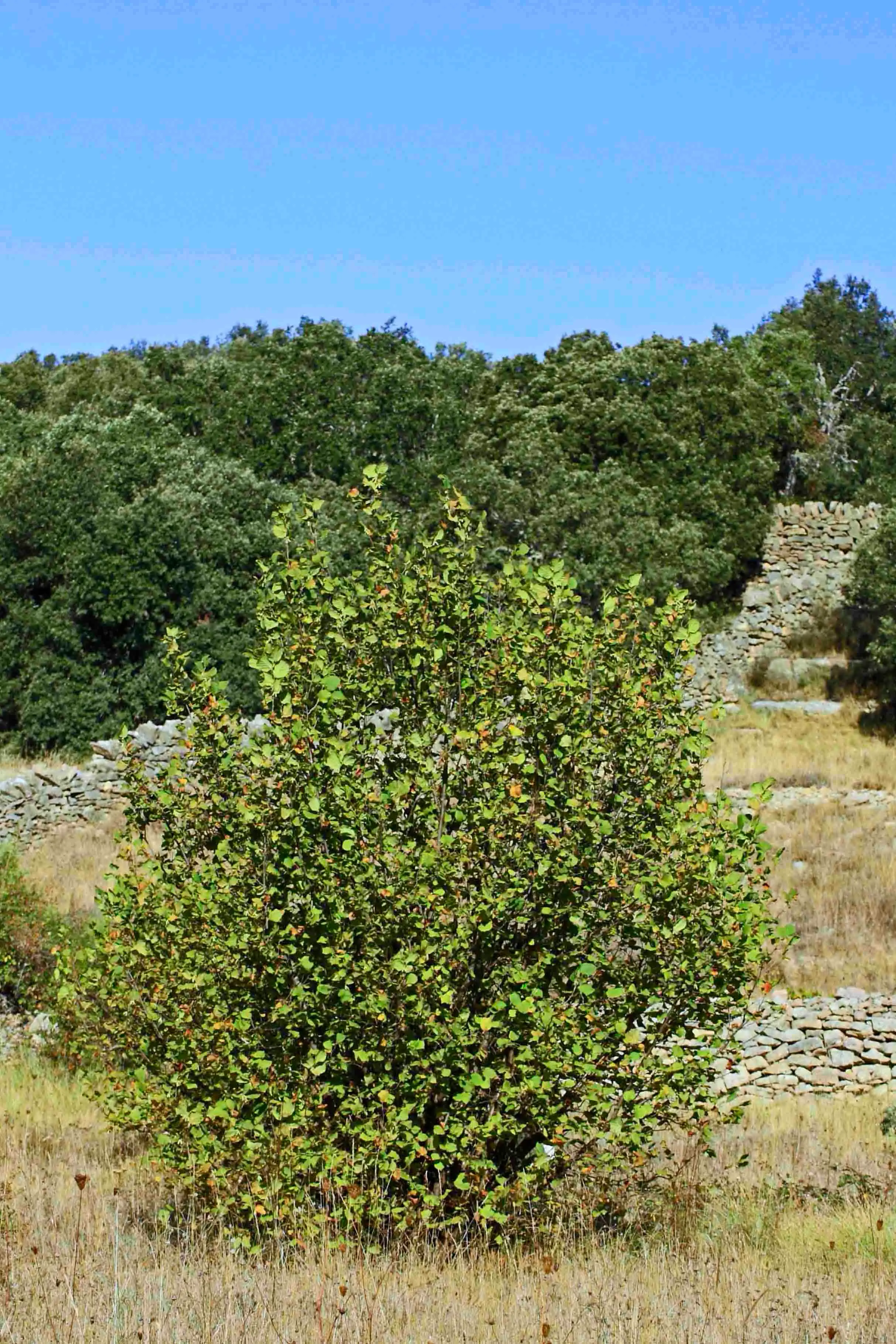
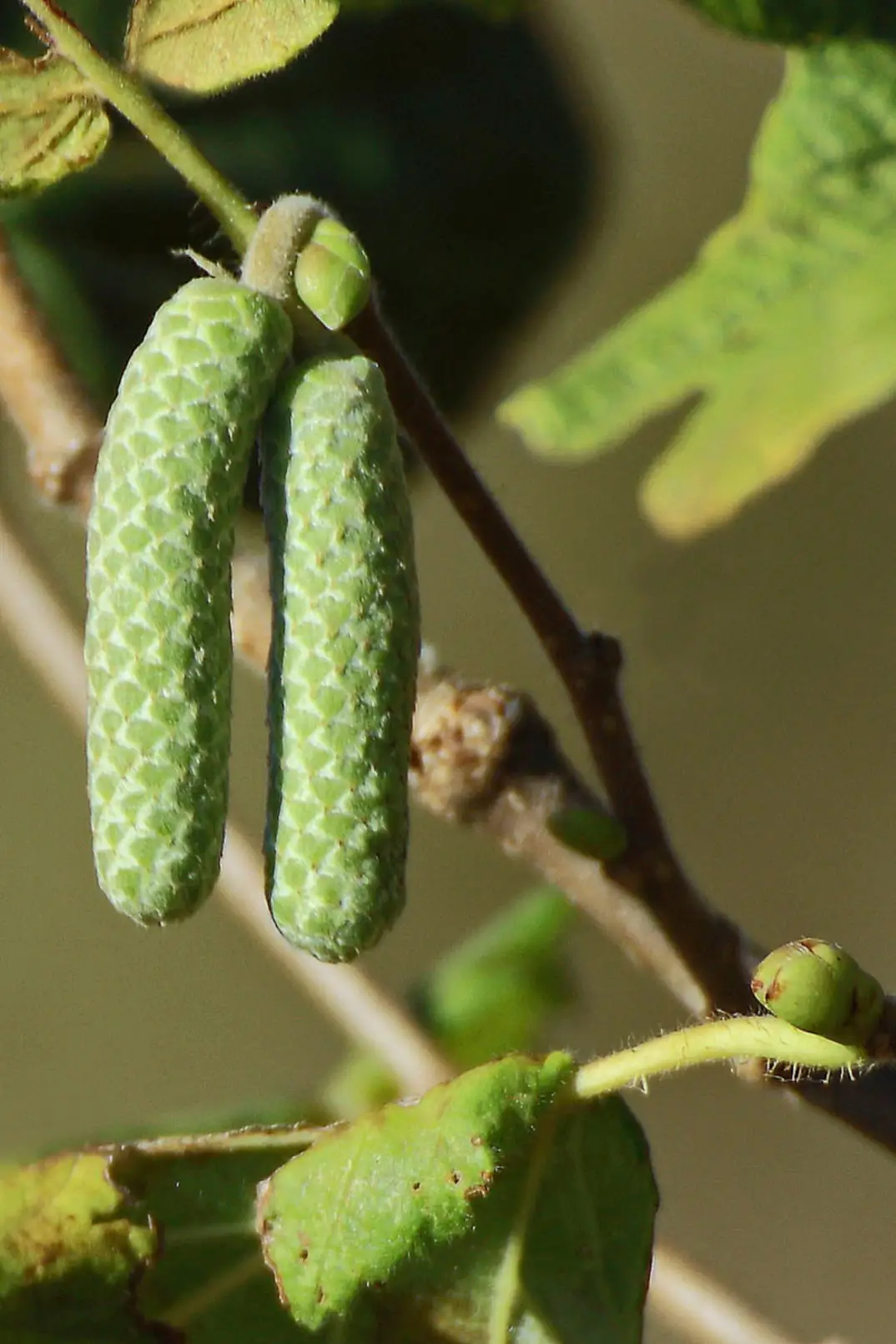
Avellaner. A shrub whose flowers open before its leaves. Male and female flowers grow separately on the same tree. Its leaf is deciduous, alternate, simple, unlobed and toothed. Its fruit is one of the “four mendicants”, together with figs, almonds and raisins; they are so called because the four mendicant orders —Franciscans, Augustinians, Dominicans and Carmelites— accepted only these fruits as offerings.
The fruit is a kind of nut eaten fresh or roasted, and used to make pastries and nougat.
Elm
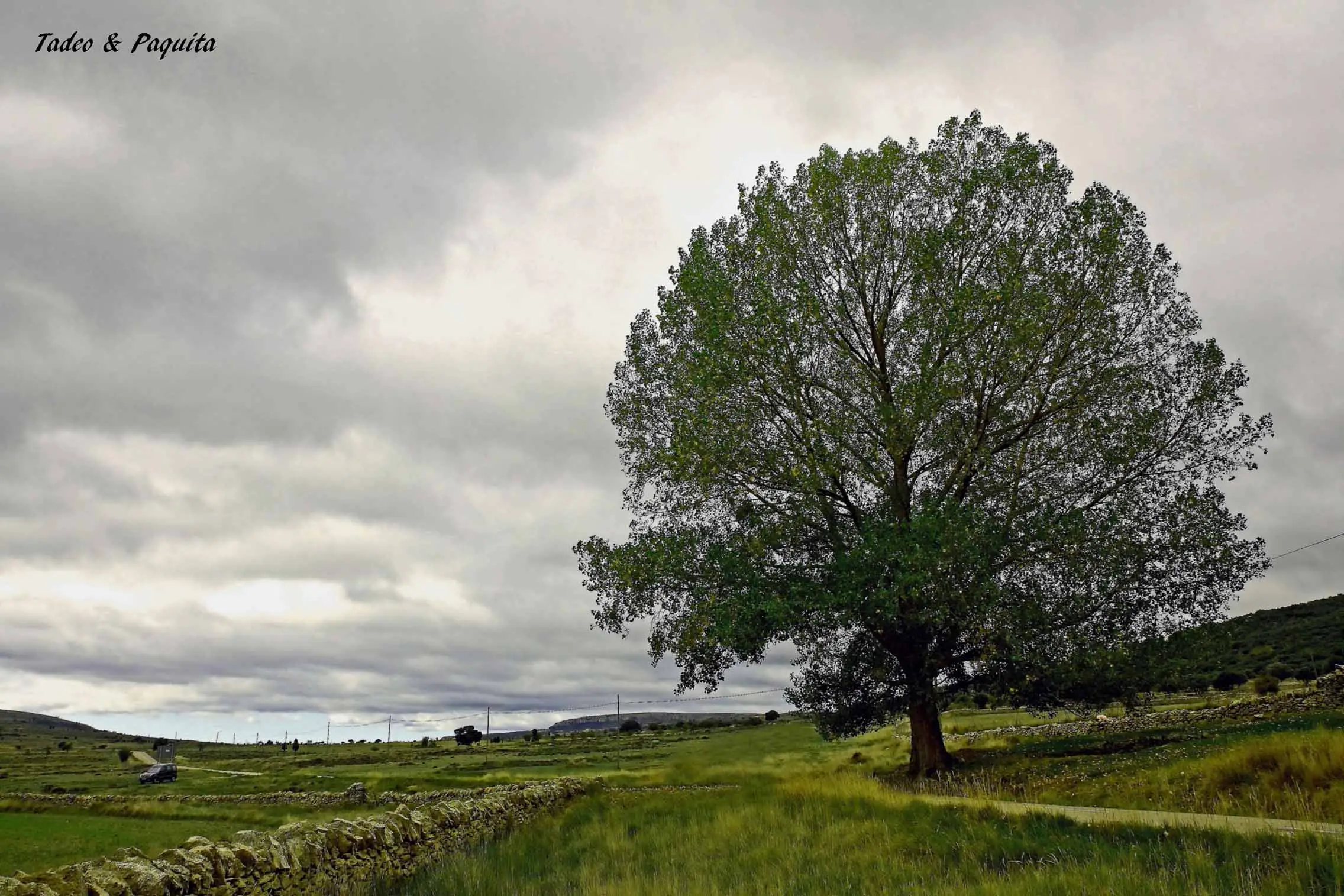
Om. A deciduous tree with fairly small, tough, dark-green leaves. The flowers are reddish and gathered in small clusters. The fruits consist of a seed surrounded by a thin, membranous, pale-green wing. The elm depends on the wind for pollination and for dispersing its fruit. It grows along the edges of ramblas and rivers, where there is usually a breeze, and its leaves move with an unmistakable whisper.
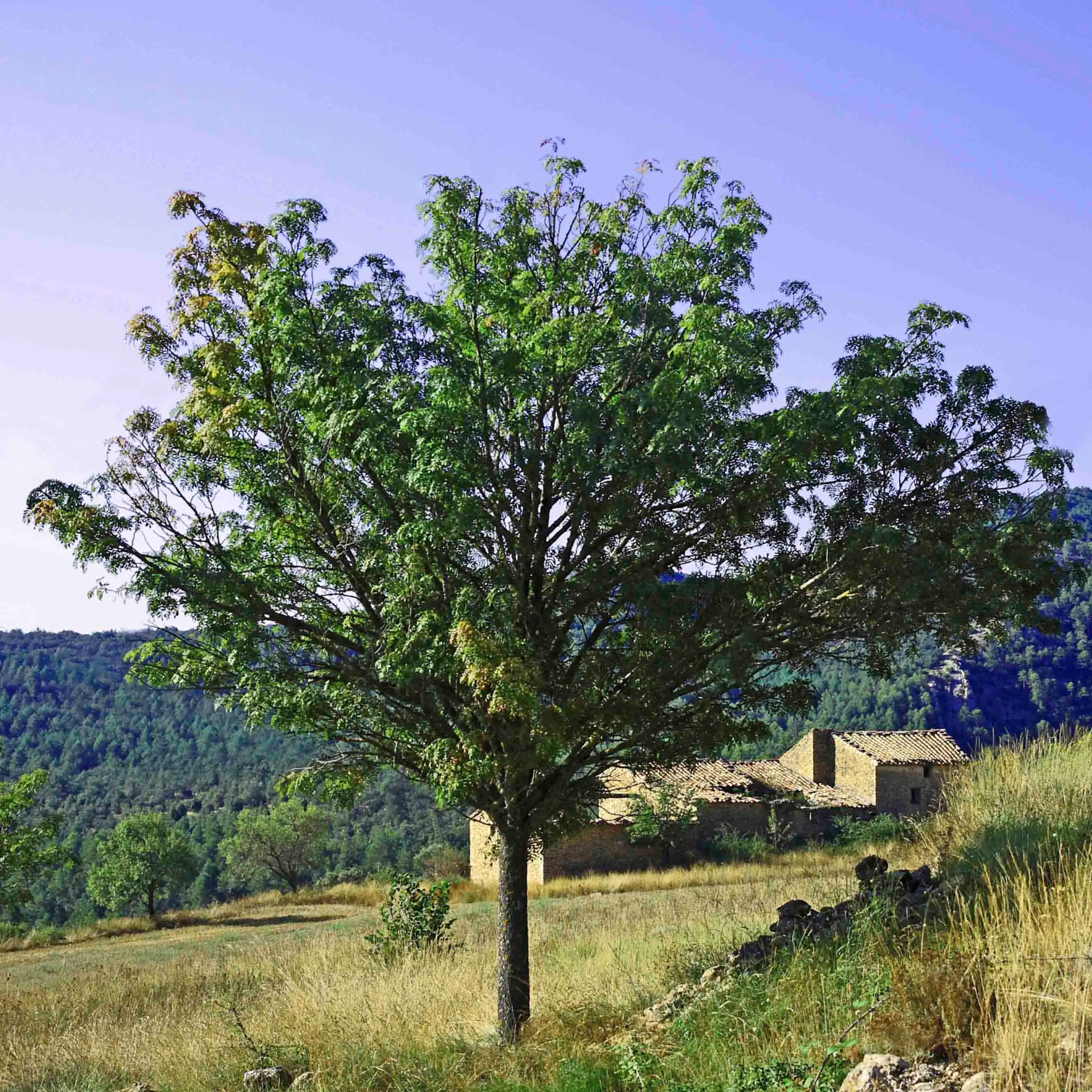
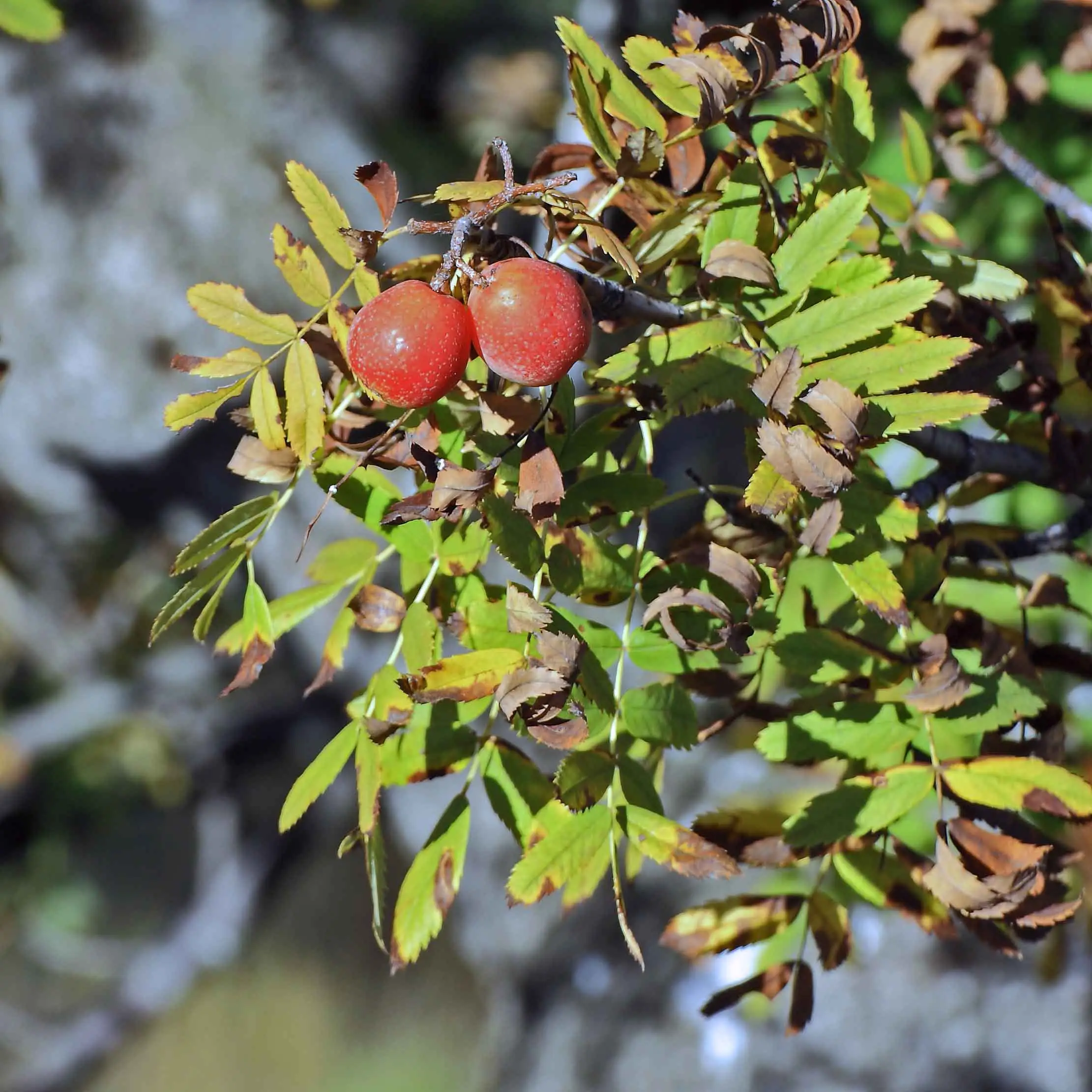
Service tree
Serves. The service tree has toothed leaves of elegant outline and grows above all in the oak woods of the middle mountains. It is very common around farmhouses. Its fruits, the sorbs, are rounded, floury and very astringent, but edible if left to over-ripen spread out on reed mats.
More in Flora
See the whole sectionWild orchids
Eight kinds on the terraces of l'Arribassada
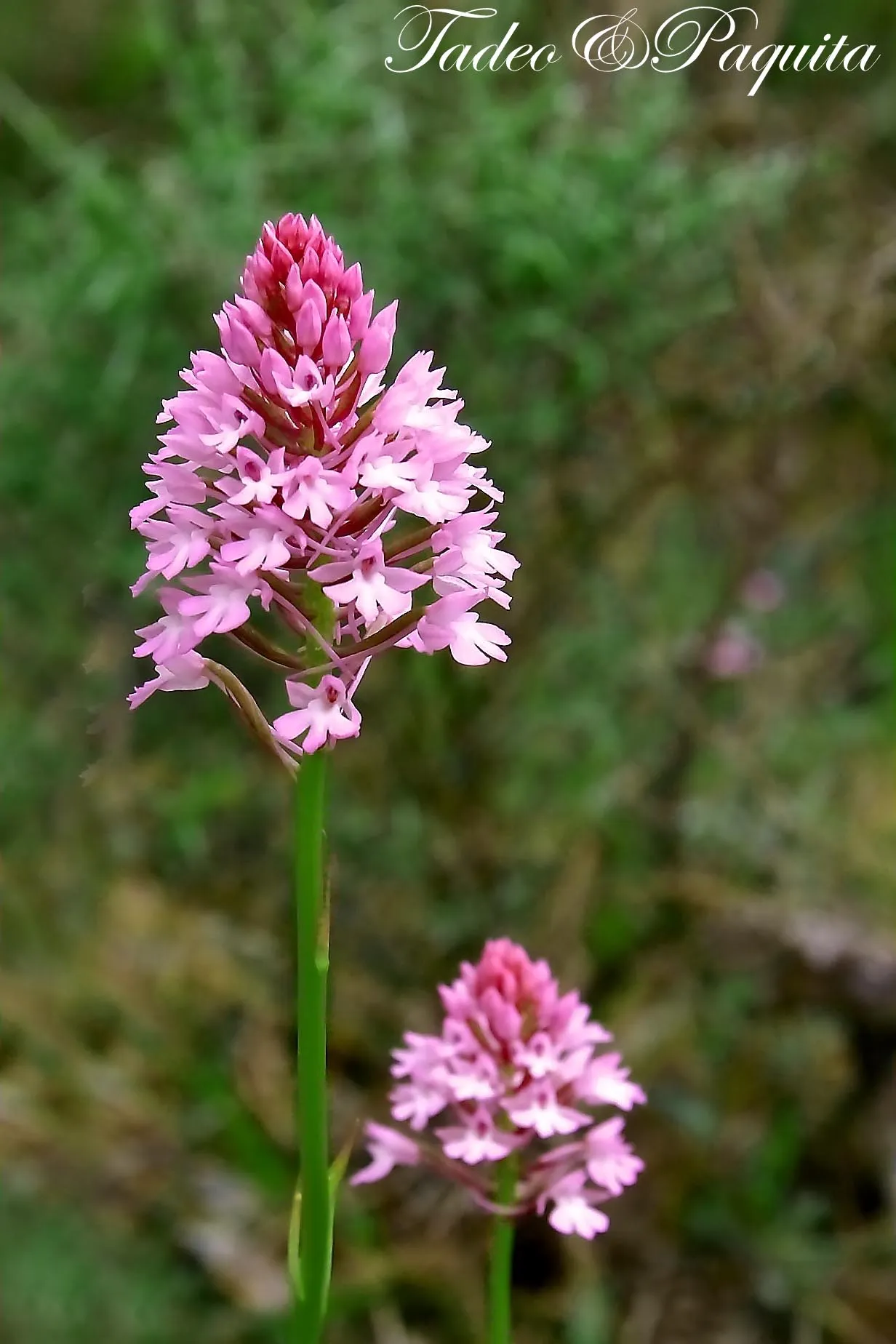
Less showy than their tropical relatives, but more delicate and subtle. Some, like the Ophrys, are trap flowers that mimic bees.
Wildflowers
Catalogue from A to Z
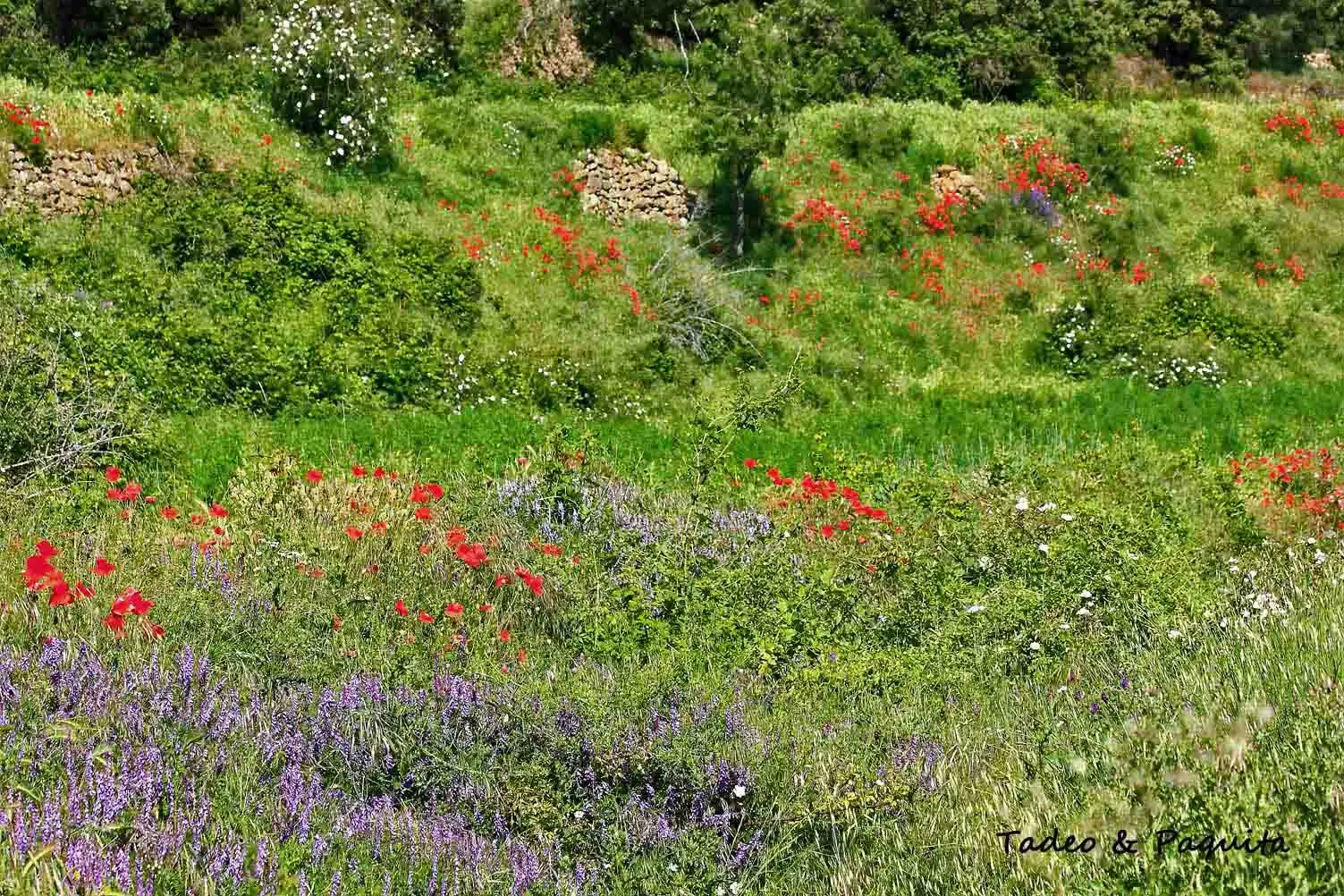
Nearly seventy flowers photographed in the rambla, listed alphabetically by scientific name and grouped by family.