Birds of prey
Griffon vulture and peregrine falcon
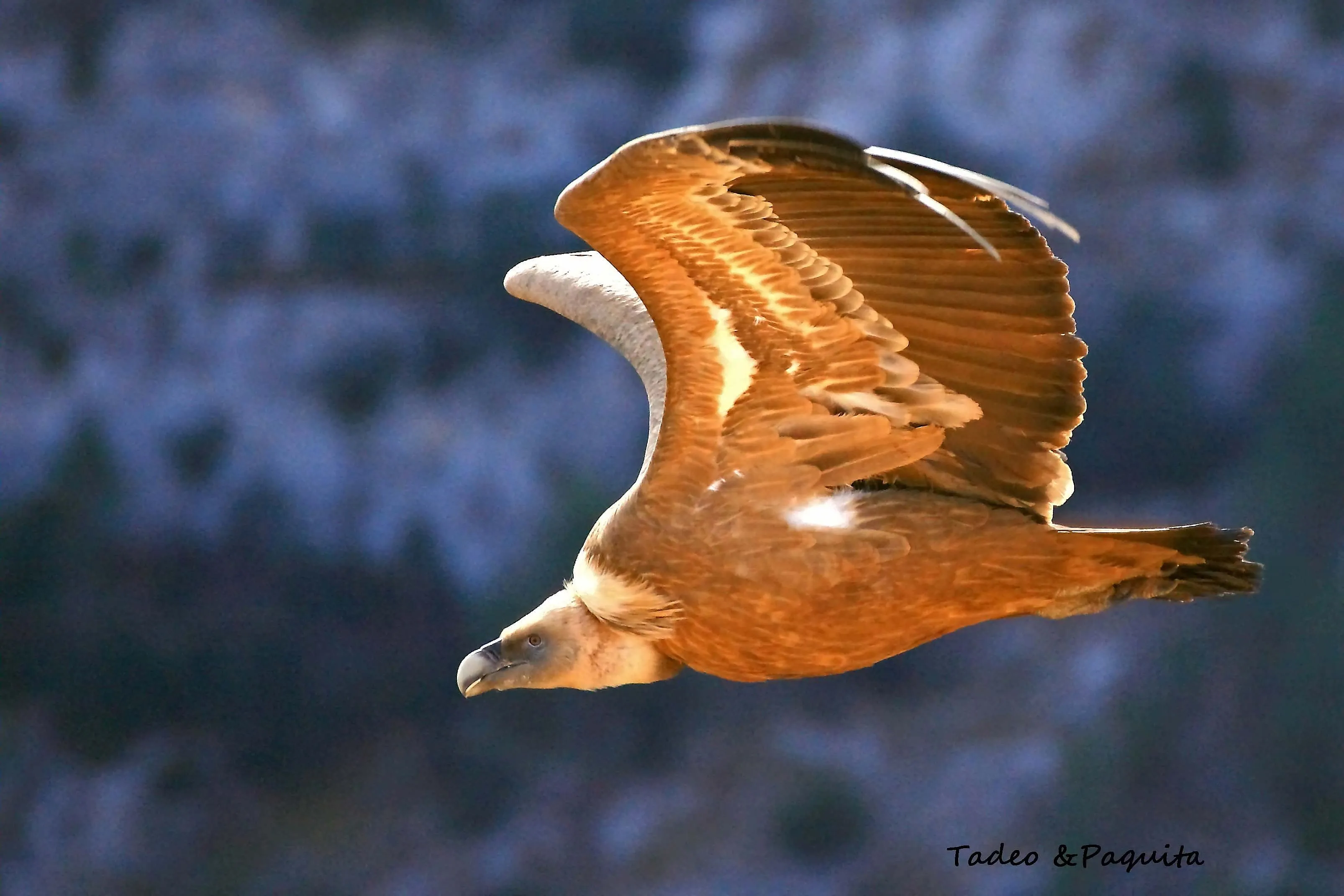
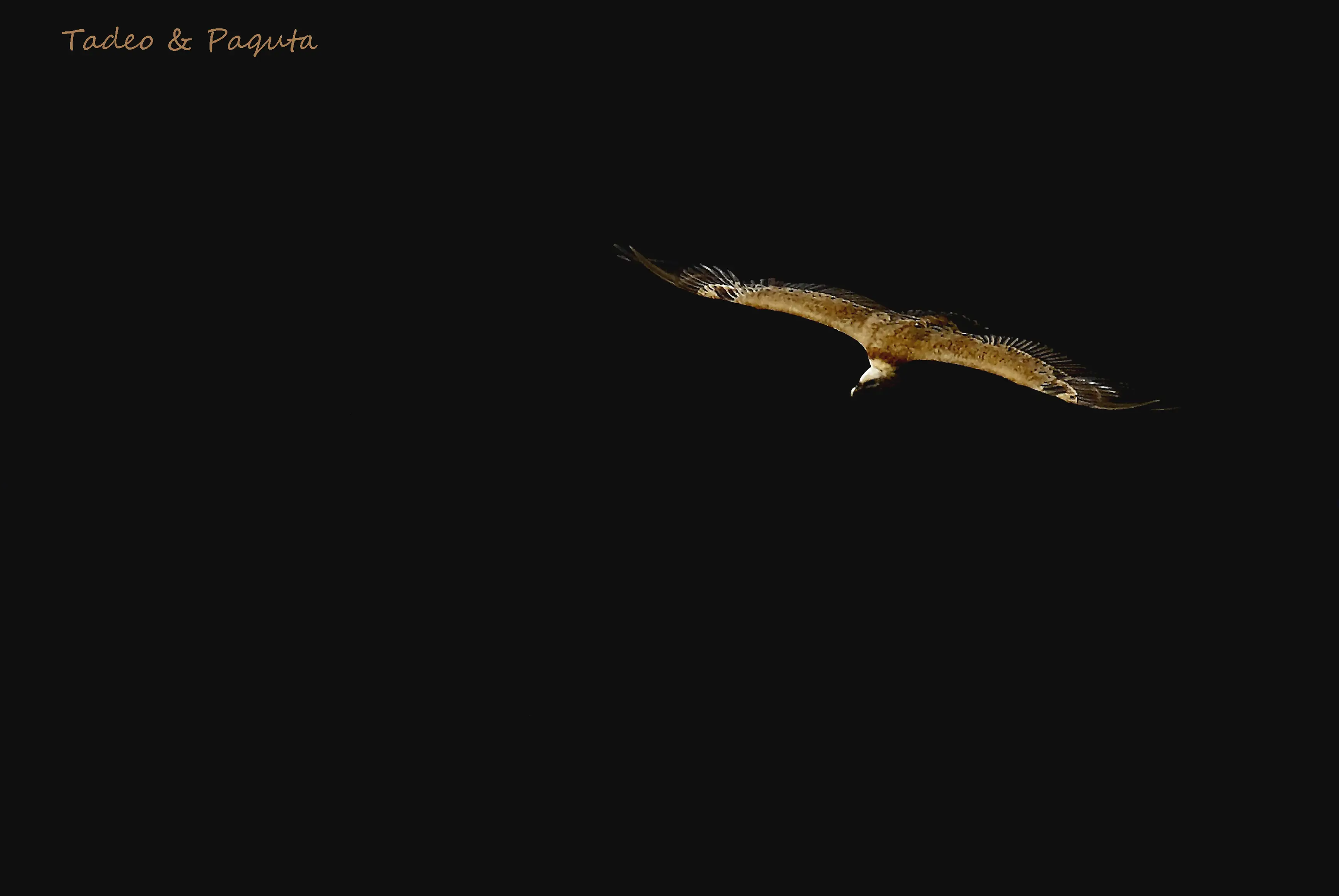
Several mornings crouched under a camouflage net at the top of the Roca Parda, until they captured the majestic flight of the vultures.
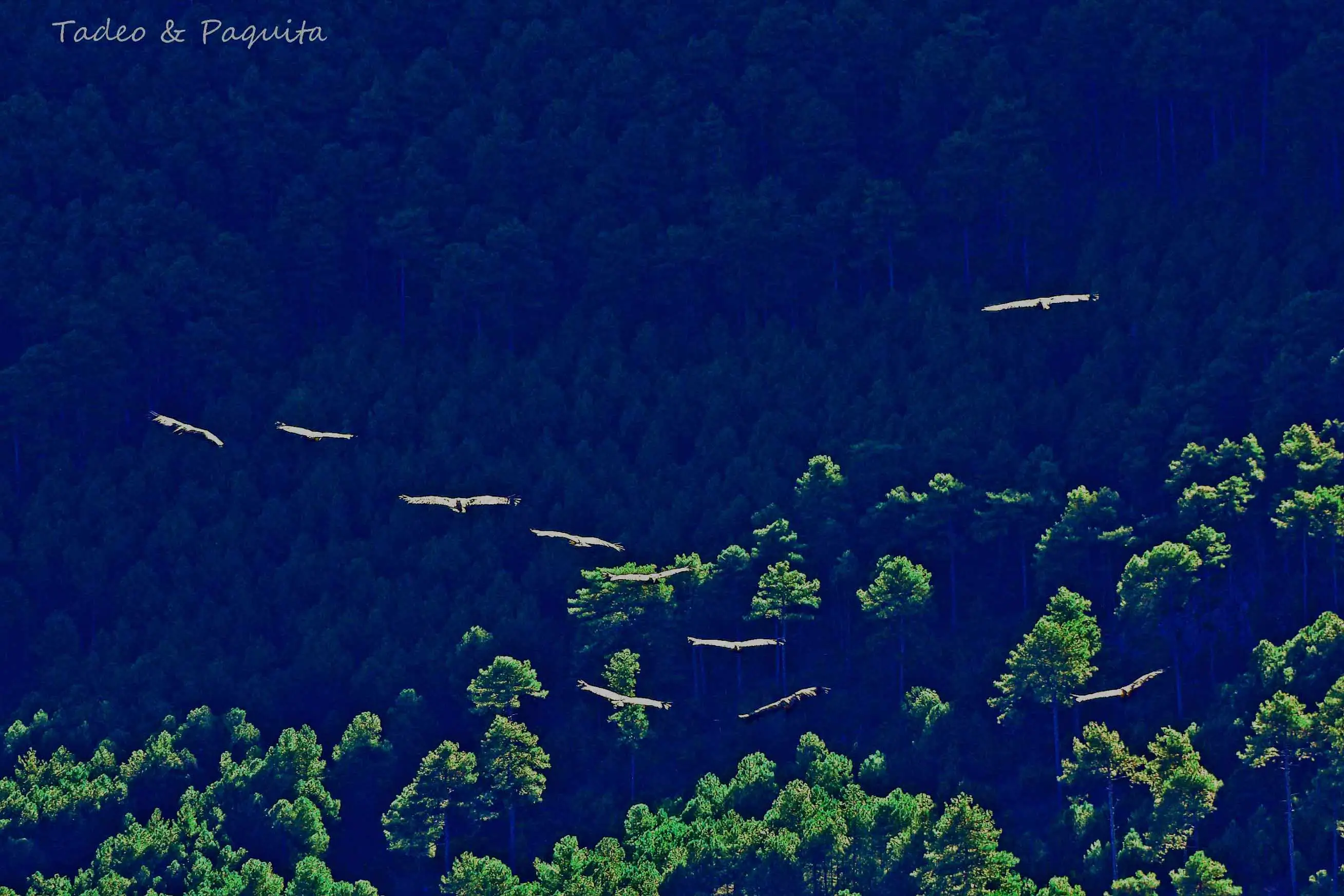
Diurnal birds of prey are predators. They live in the highest places of the mountain ranges of this area. They are hunters, and have developed such features as excellent eyesight for spotting their prey, far more perfect than ours. To seize and tear their prey they are equipped with talons and very sharp beaks.
They vary in outward form according to their way of life and their diet, which is diverse.
Griffon vulture
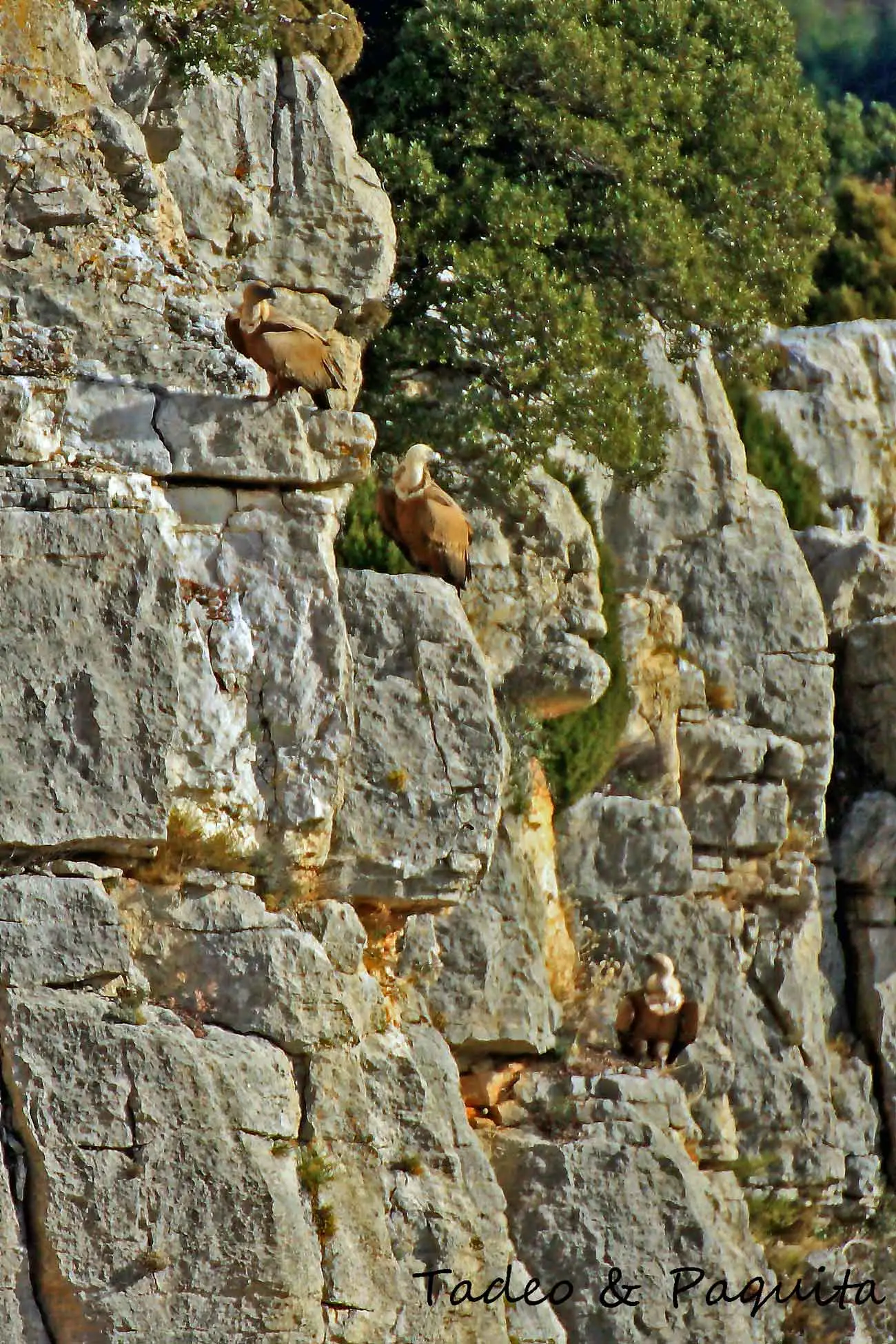
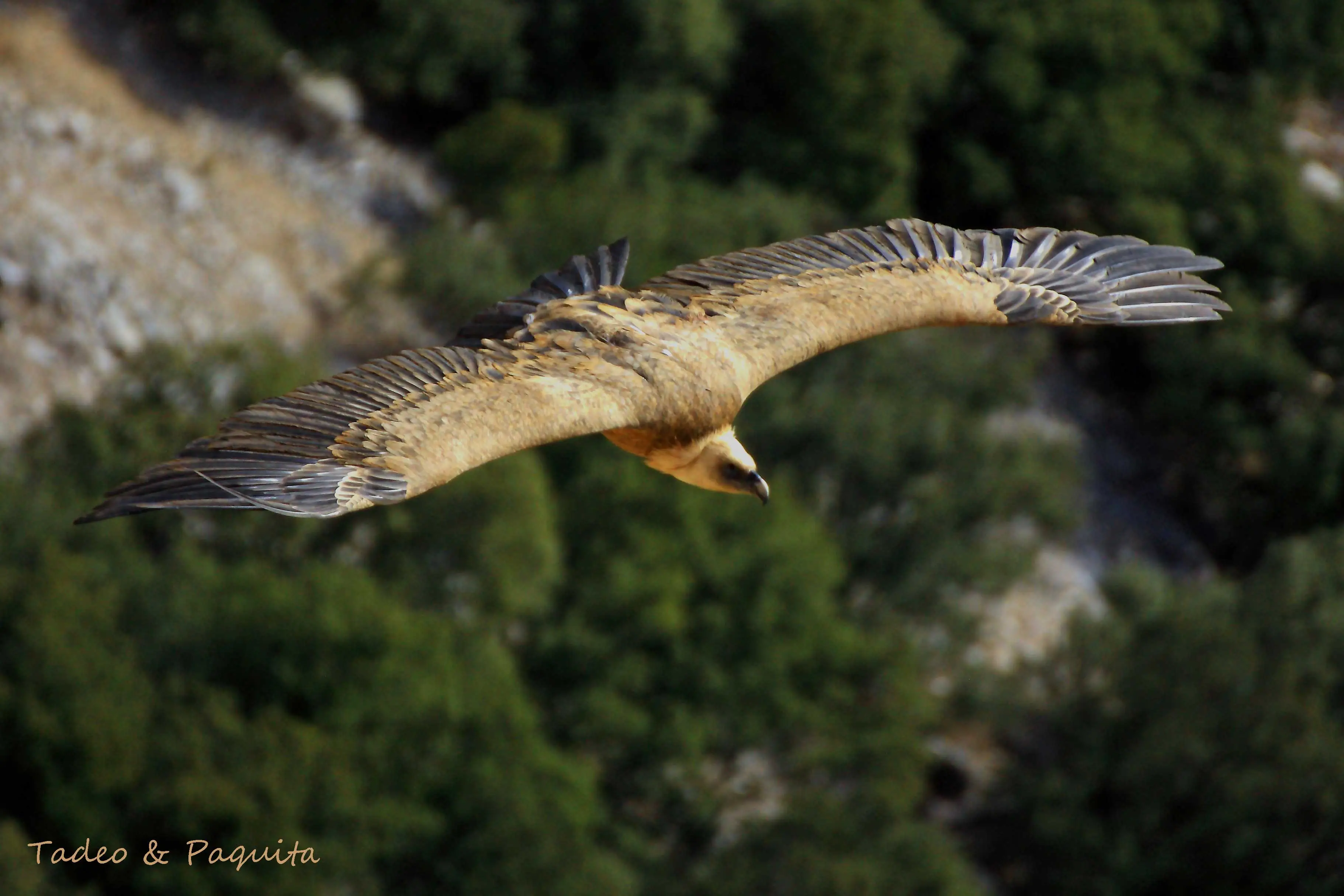
On the limestone cliffs of the Roca Parda, in the Rambla Celumbres, scavenging raptors are common; they feed on carrion and so play a regulating role in the ecosystems where they live. Such is the griffon vulture (Gyps fulvus), which is grouped in the order Falconiformes, lives in colonies and is one of the largest birds of prey to be found in the Iberian Peninsula.
To get these photographs, my brother Tadeo and I, Paquita, spent several mornings crouched under a camouflage net at the very top of the rocky cliff, until we managed to capture their majestic flight.
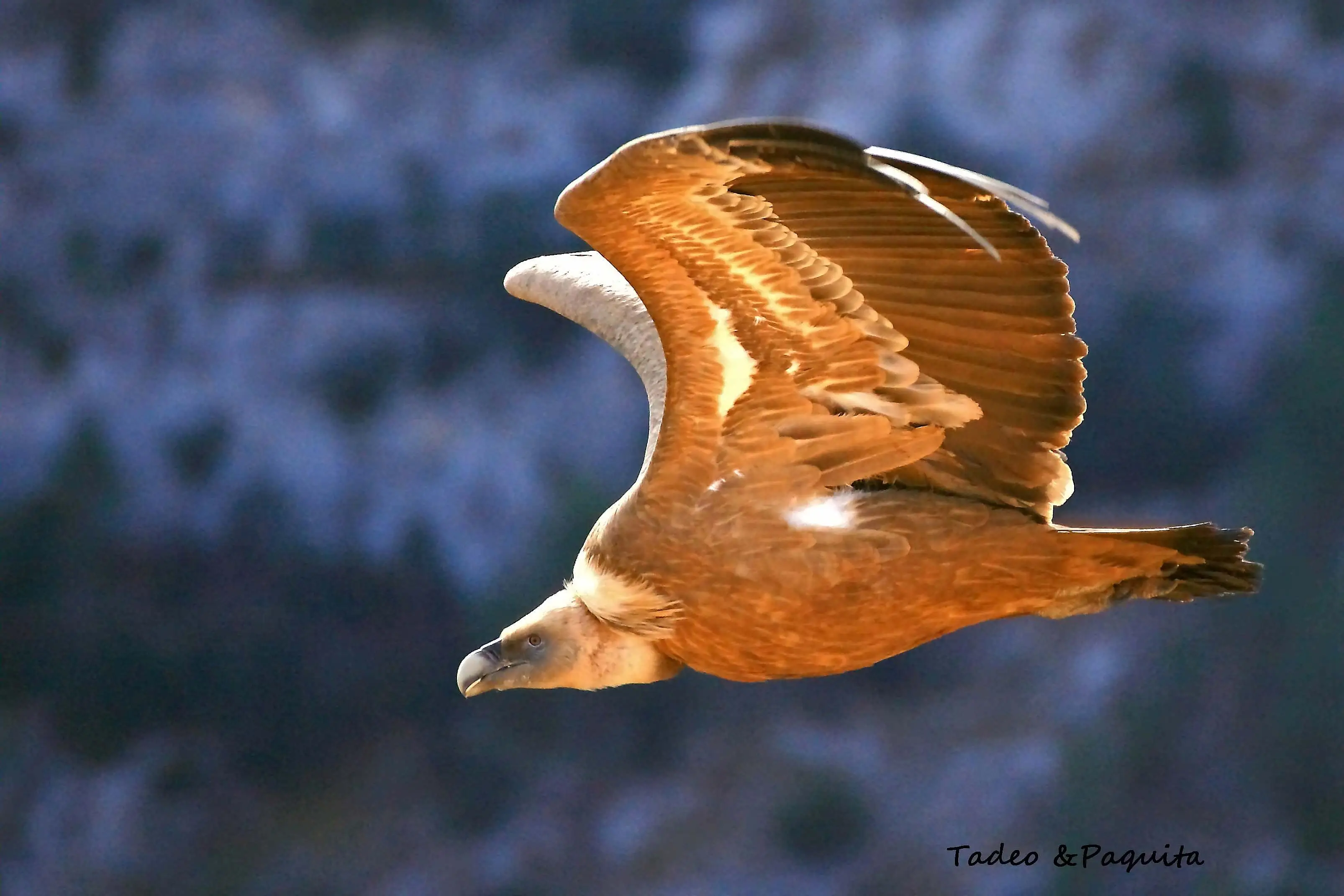
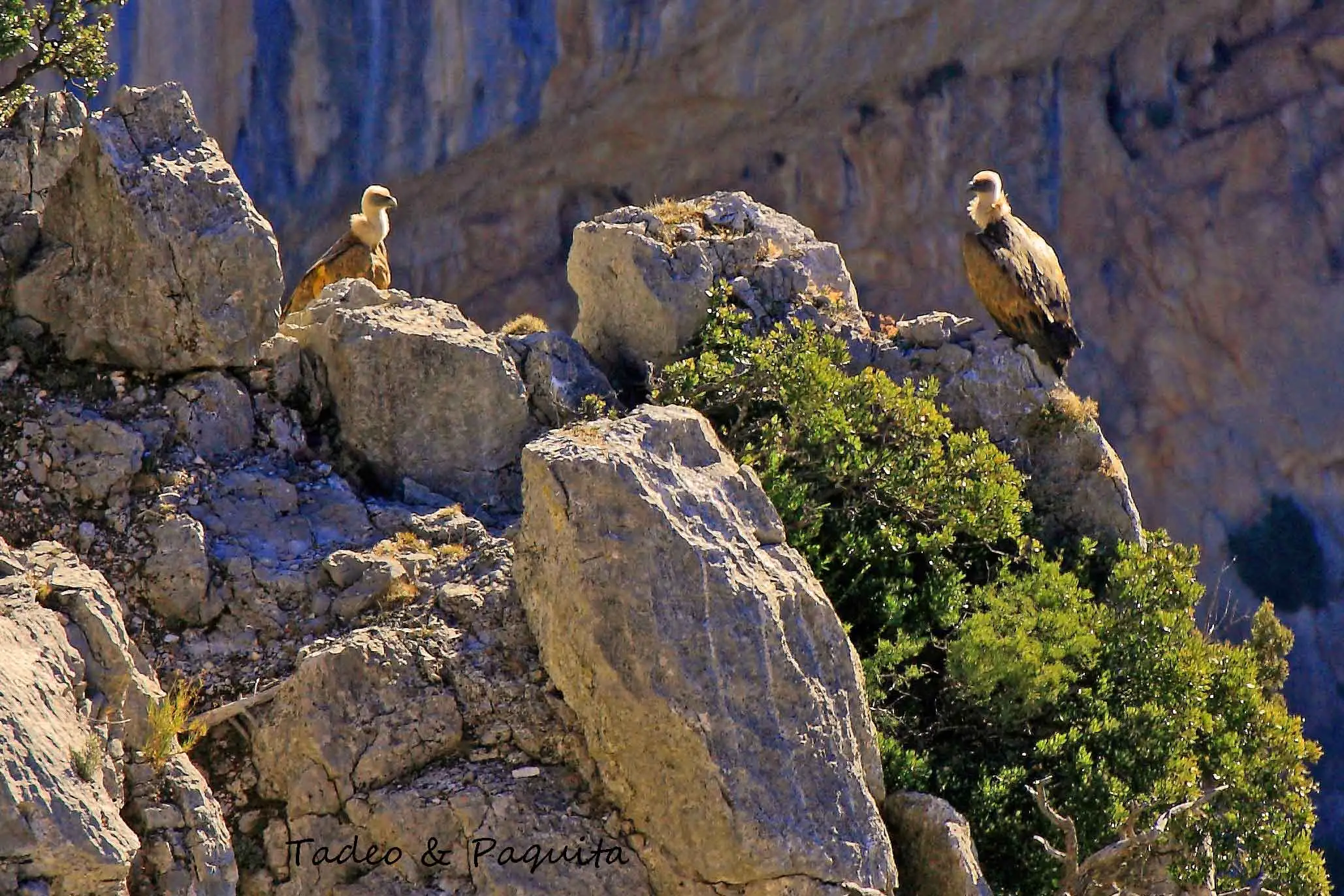
The griffon vulture spends much of its time gliding effortlessly, without beating its wings, rising in search of the thermals on which it travels. Its wings form a right angle with its body.
It is a very large bird, with a wingspan of more than 2.50 metres. Its head is almost bald, with short down, and it has a ruff of feathers around the neck. The colour of its plumage is like a lion’s, which is probably where its Spanish name, buitre leonado, comes from. It is sedentary and gregarious.
Peregrine falcon
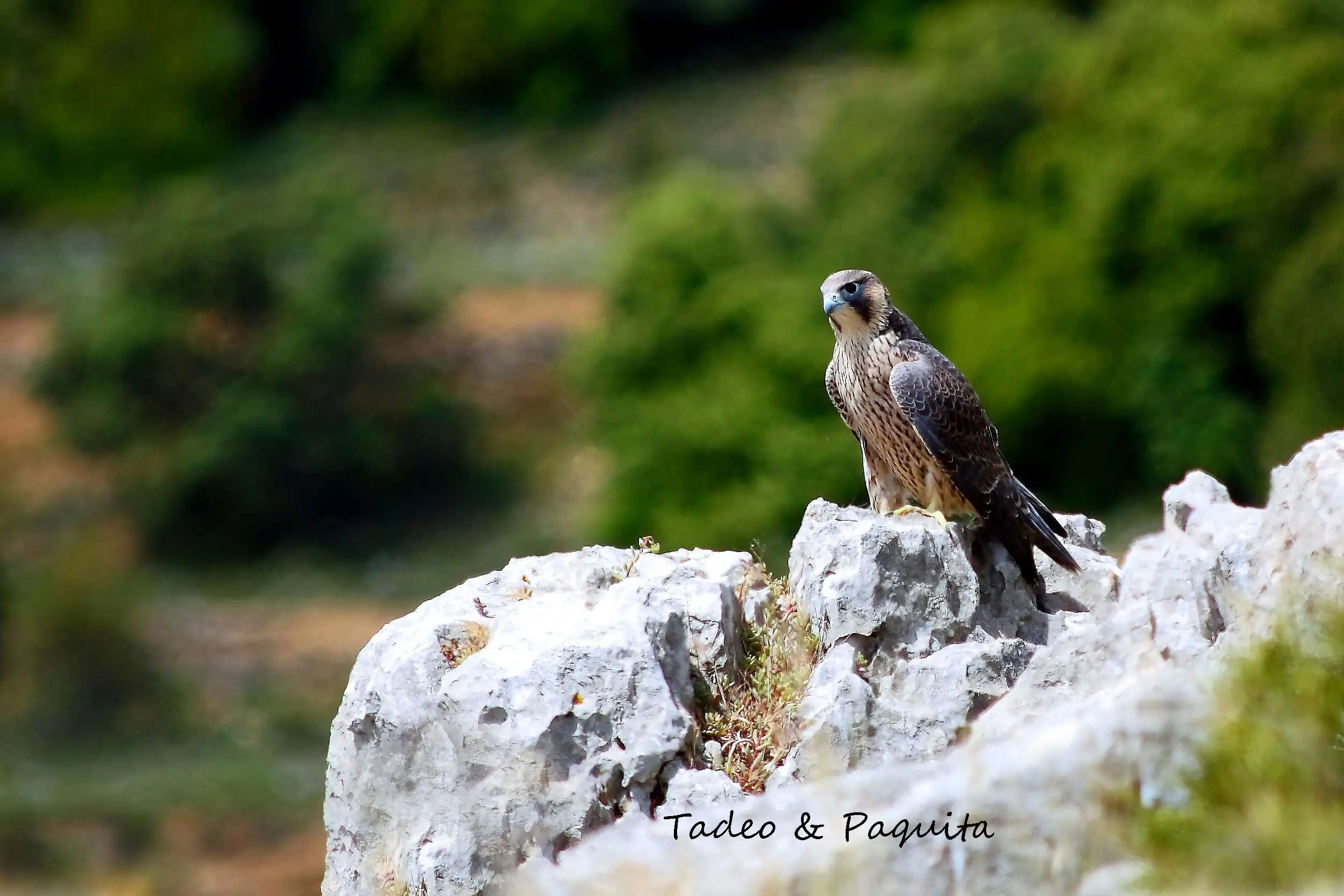
Falcons have an elegant, proud look. Their wings are slender and their body sleek; they can dive at great speed on their prey, generally birds.
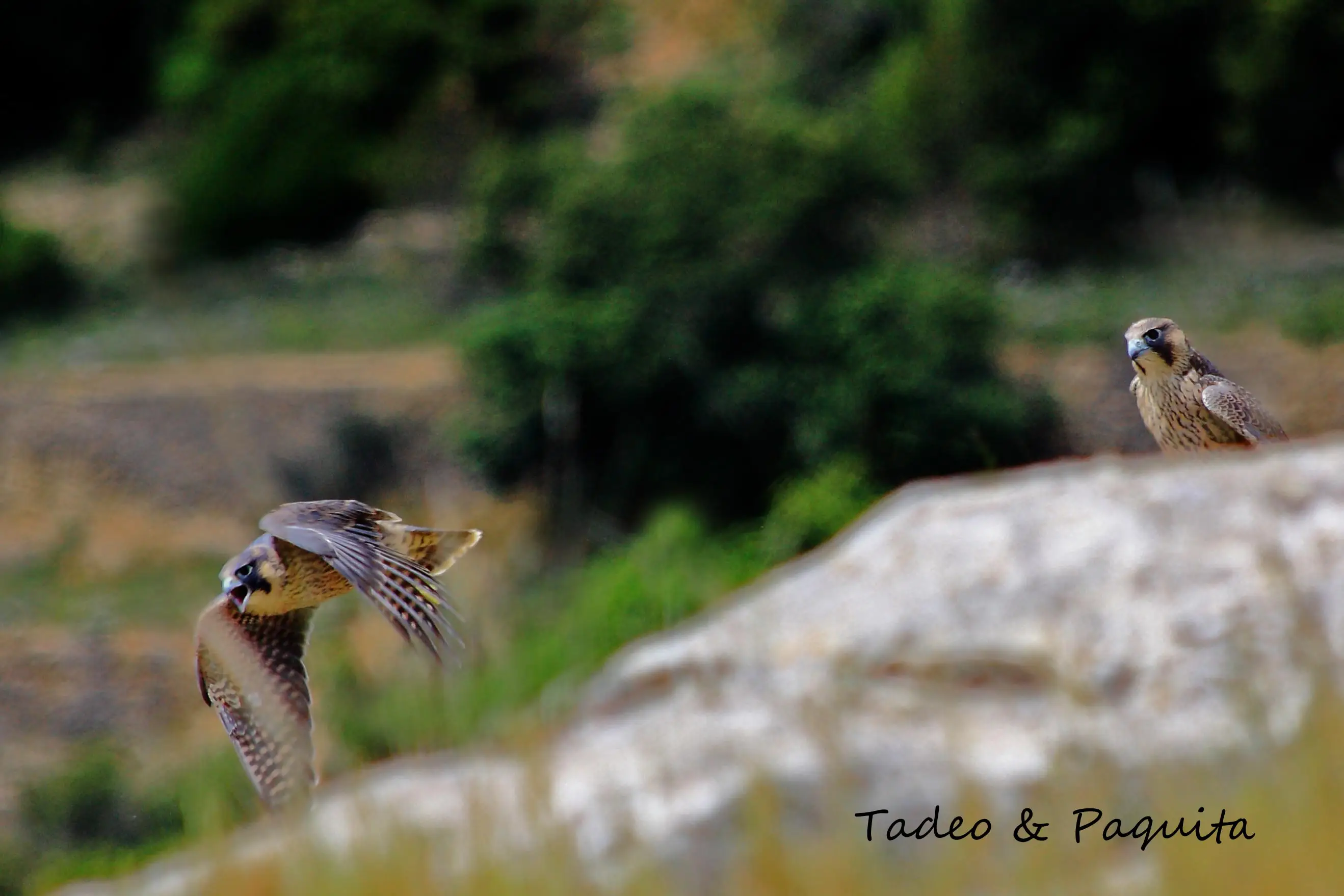
In these dives, peregrine falcons reach speeds of more than 300 kilometres an hour. They lay their eggs in a small hollow or on a sheltered rock ledge, and usually change nest every few years. Some pairs use the empty nests of other birds to lay their eggs, between March and April. It is very aggressive towards other birds of prey.
More in Fauna
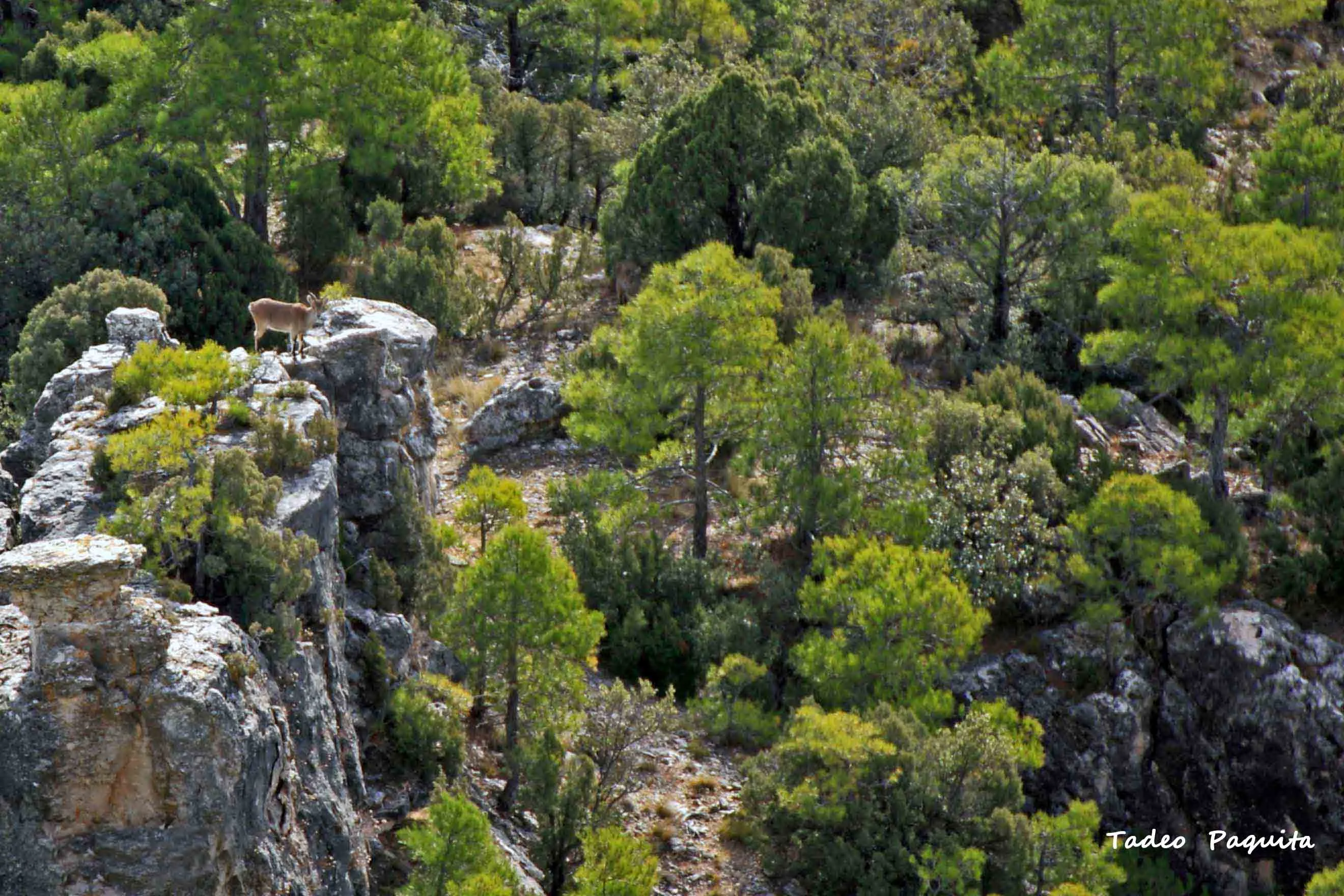
See the whole sectionIberian ibex
Capra pyrenaica
They climb gorges and crags on the edge of the abyss, and when the group is feeding there is always one on watch. At the first sign of danger, they all run.
Butterflies
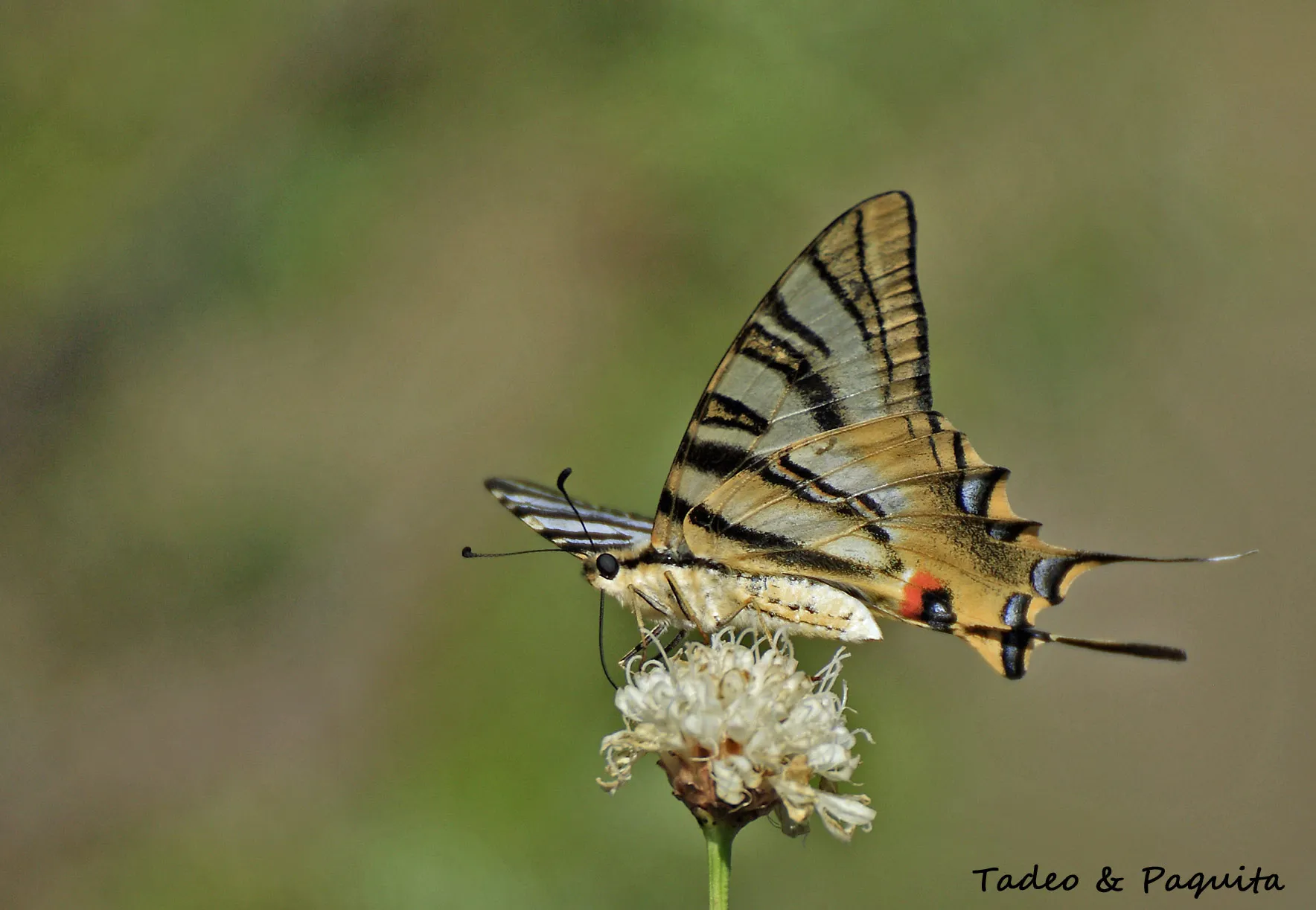
Papallones, palometes
Wings covered in scales and antennae ending in a club. Five families live in the rambla; the nymphalids are the most abundant.
Moths
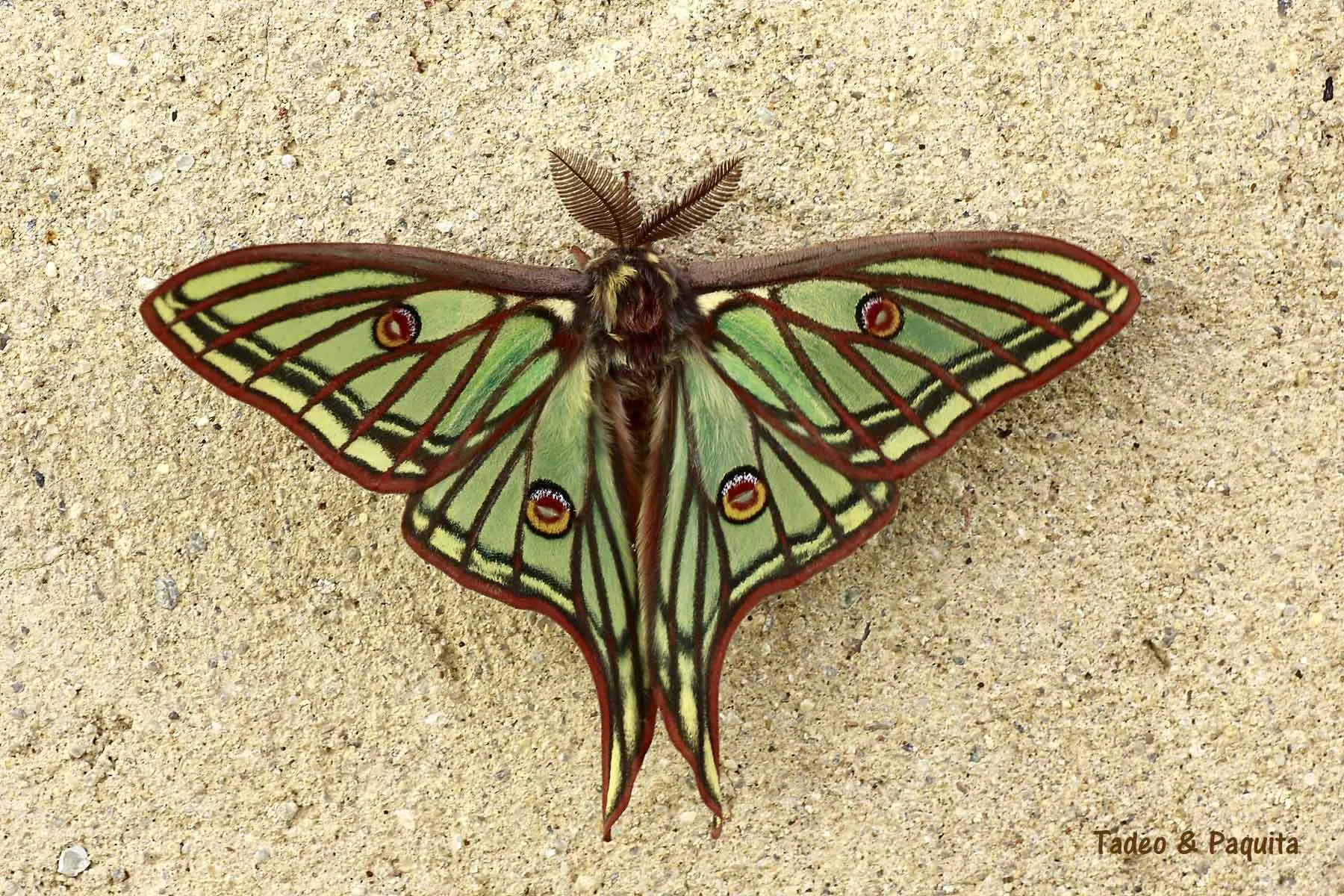
The first moth of the season
A Graellsia isabellae almost as big as a hand, found at seven in the morning at the dels Bassis spring, and other moths of the rambla.