Bugs
Hemiptera
Wings half hard, half membranous, and bright colours that warn of their foul taste. Among them, a North American invader that threatens the pines.
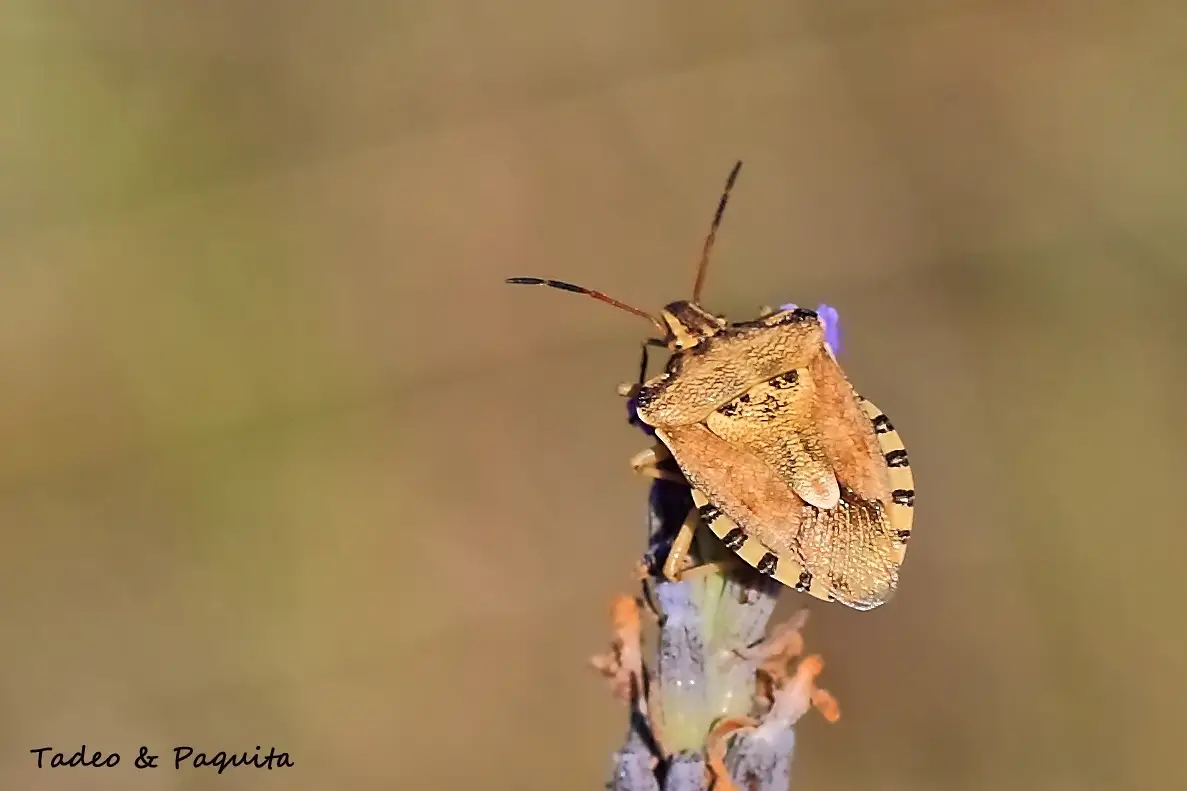
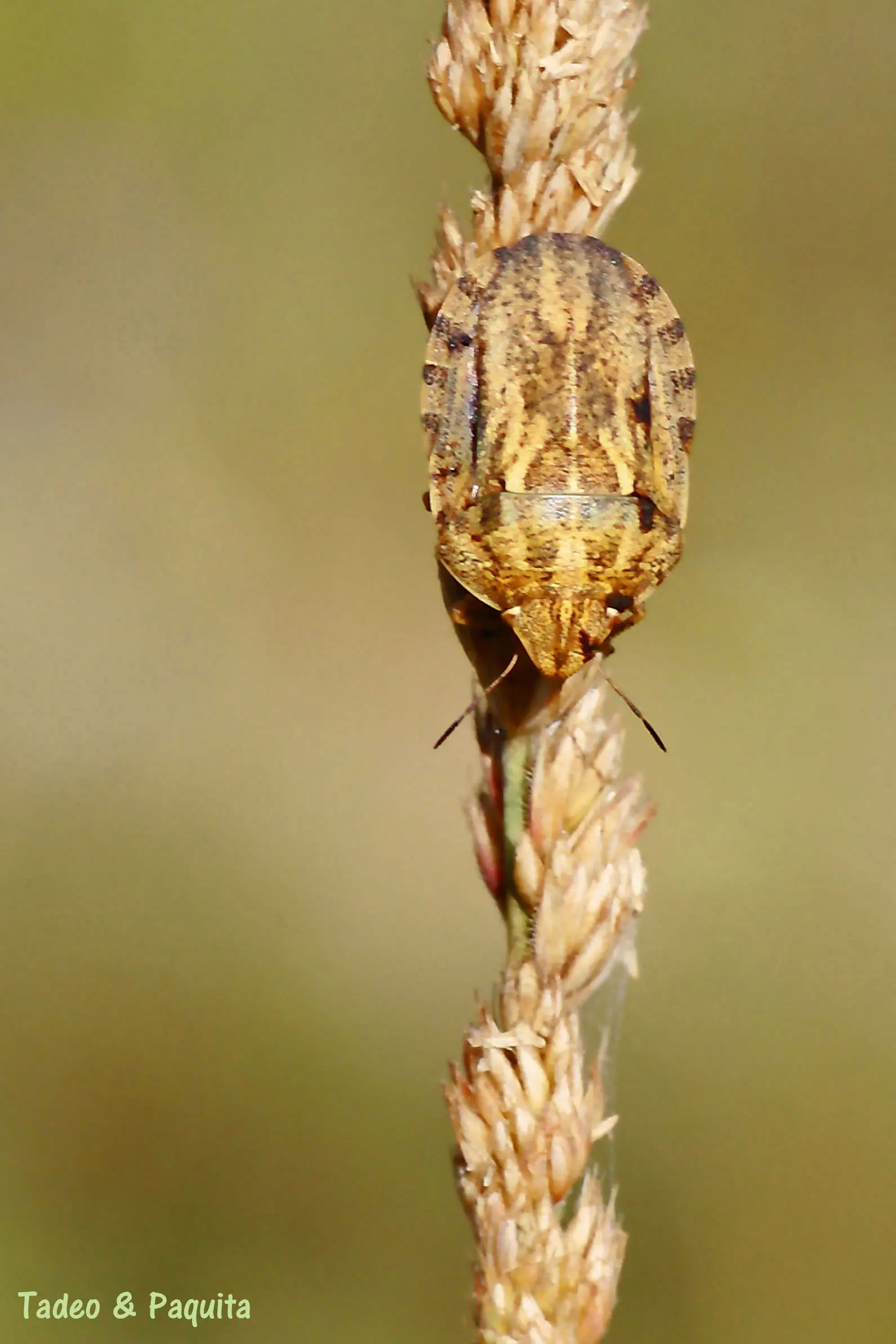
Plant bugs have wings divided into a hard basal half and a membranous half. Their mouthparts are of the sucking kind, with four stylets which, depending on the species, suck sap or blood, as in the case of bedbugs, which transmit disease.
Although there are predatory and parasitic species, most feed on herbaceous plants, from which they draw the sap; because of this the plants weaken and have trouble flowering and developing their fruit.
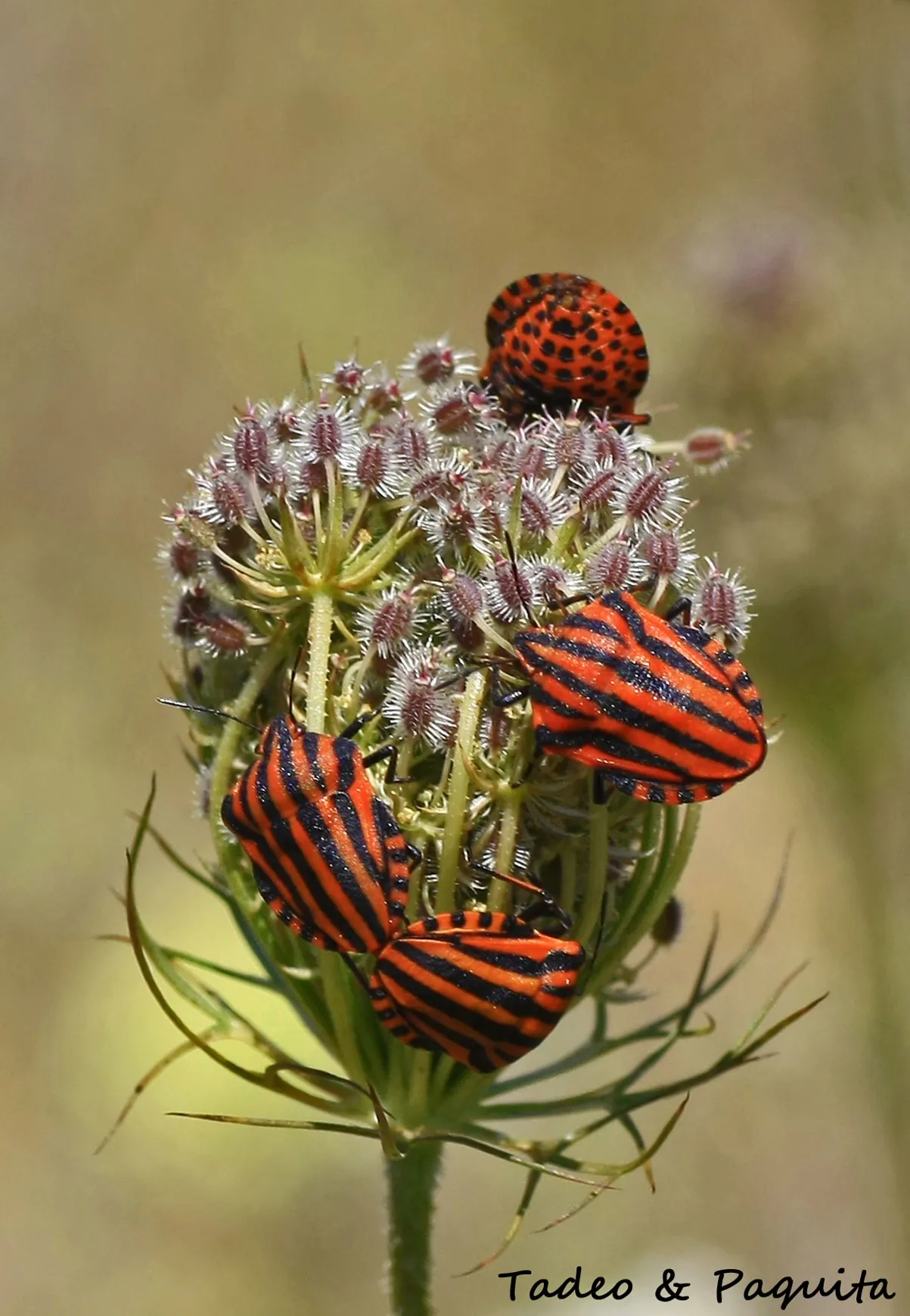
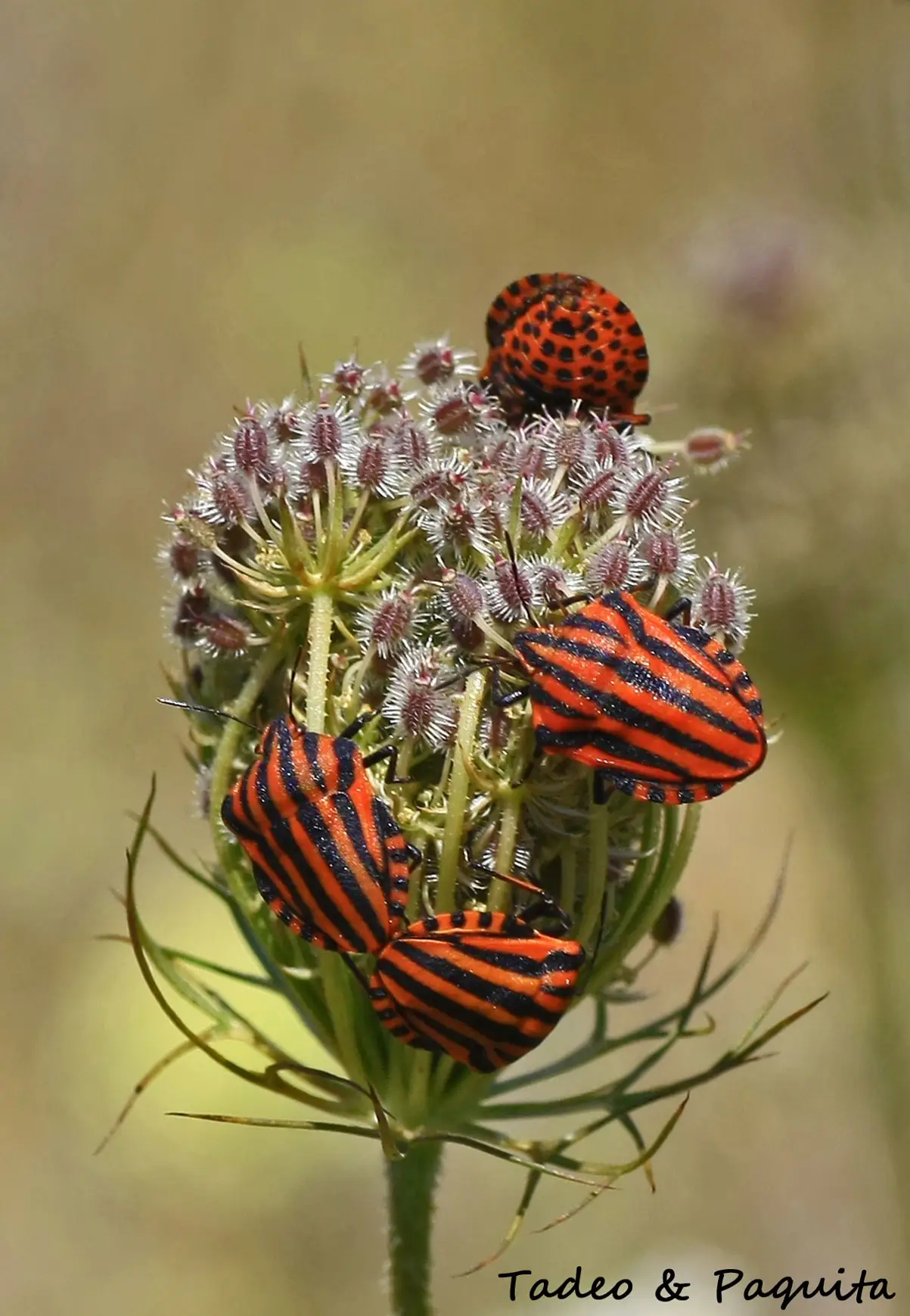
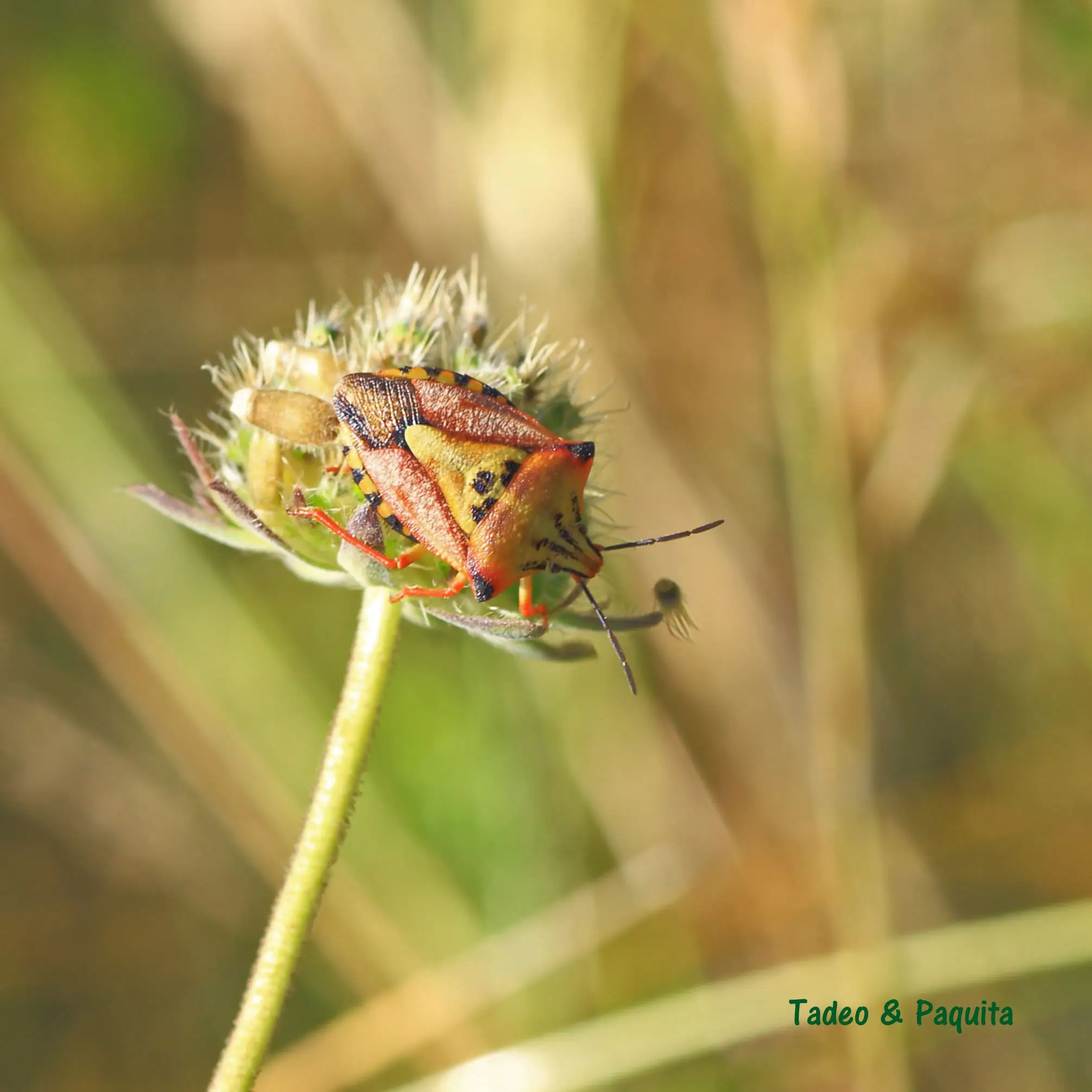
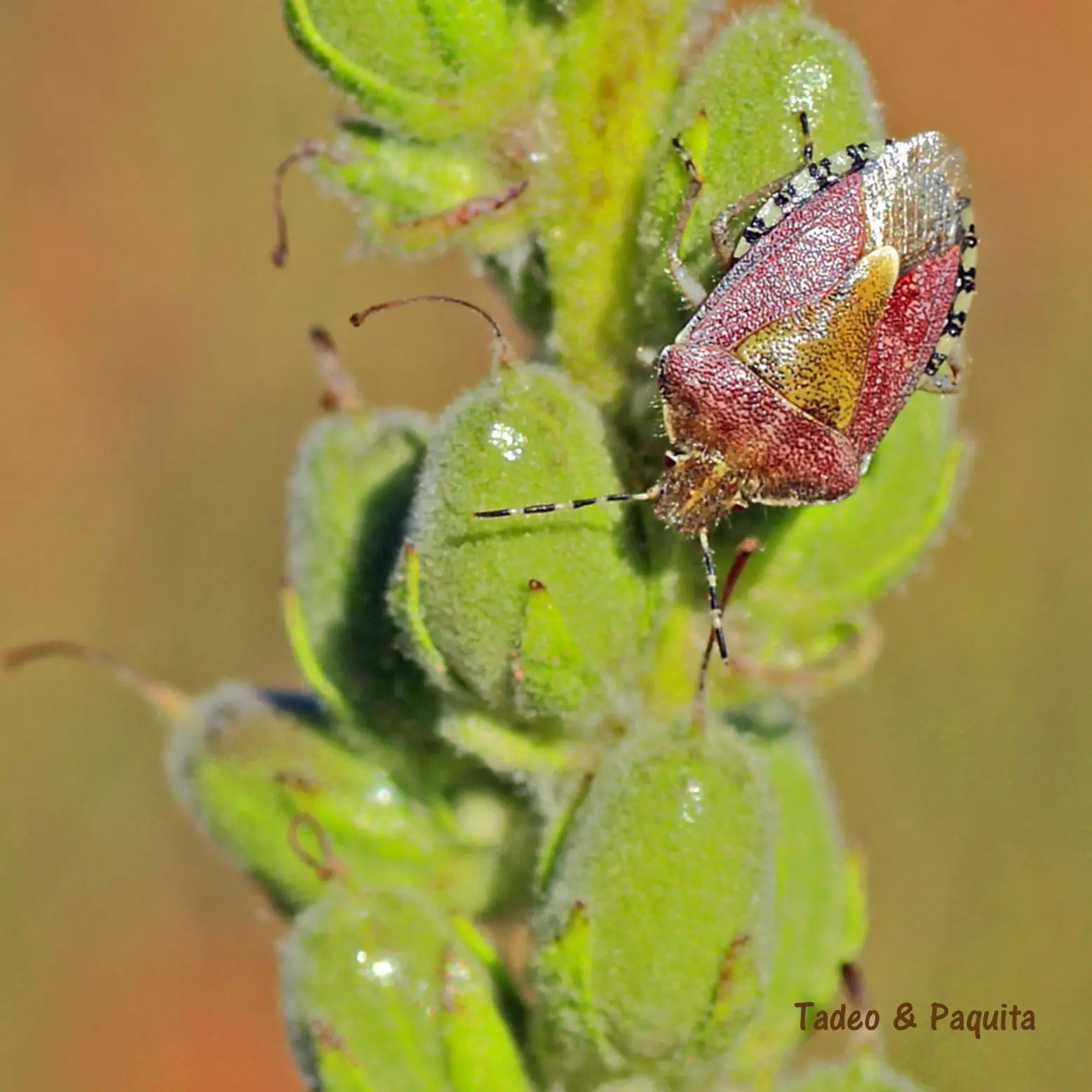
Stink bugs (de pudó) have few predators because they store in their bodies the foul-tasting compound they find in the milky plants they feed on, generally on the underside of the leaves. Their bright orange, red and black colouring serves as a warning that they taste bad.
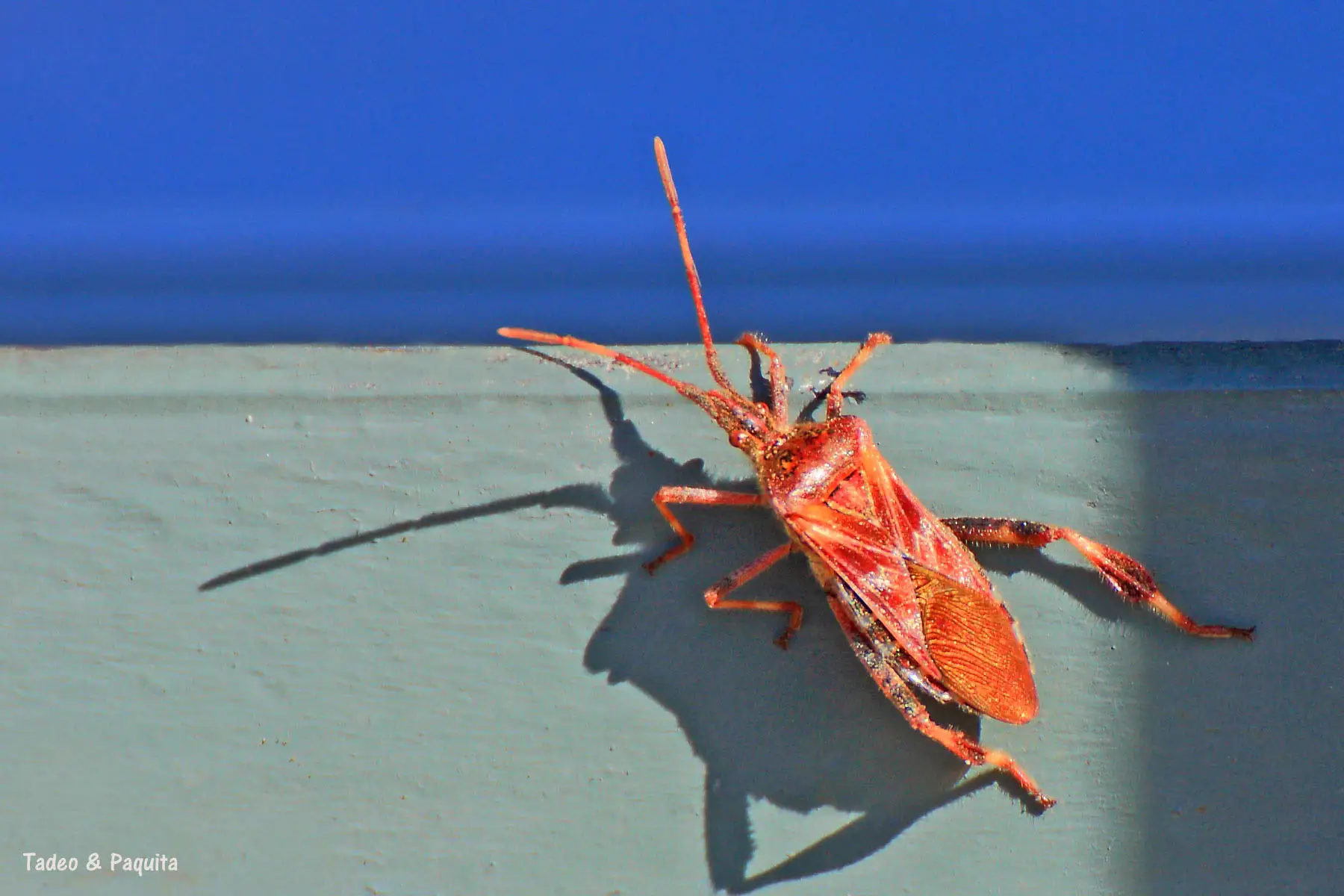
Leptoglossus occidentalis
I have identified this insect as an invasive species. This North American bug threatens the pines by destroying the seeds in their cones: its mouthparts are a piercing tube through which, as with a straw, it sucks the sap from the tender cones. Its large, flattened, leaf-shaped hind legs are typical of American species. It was first found in Spain in 2004, in Girona; they spread fast and are already almost more abundant than the native species.
More in Fauna
See the whole sectionBirds of prey
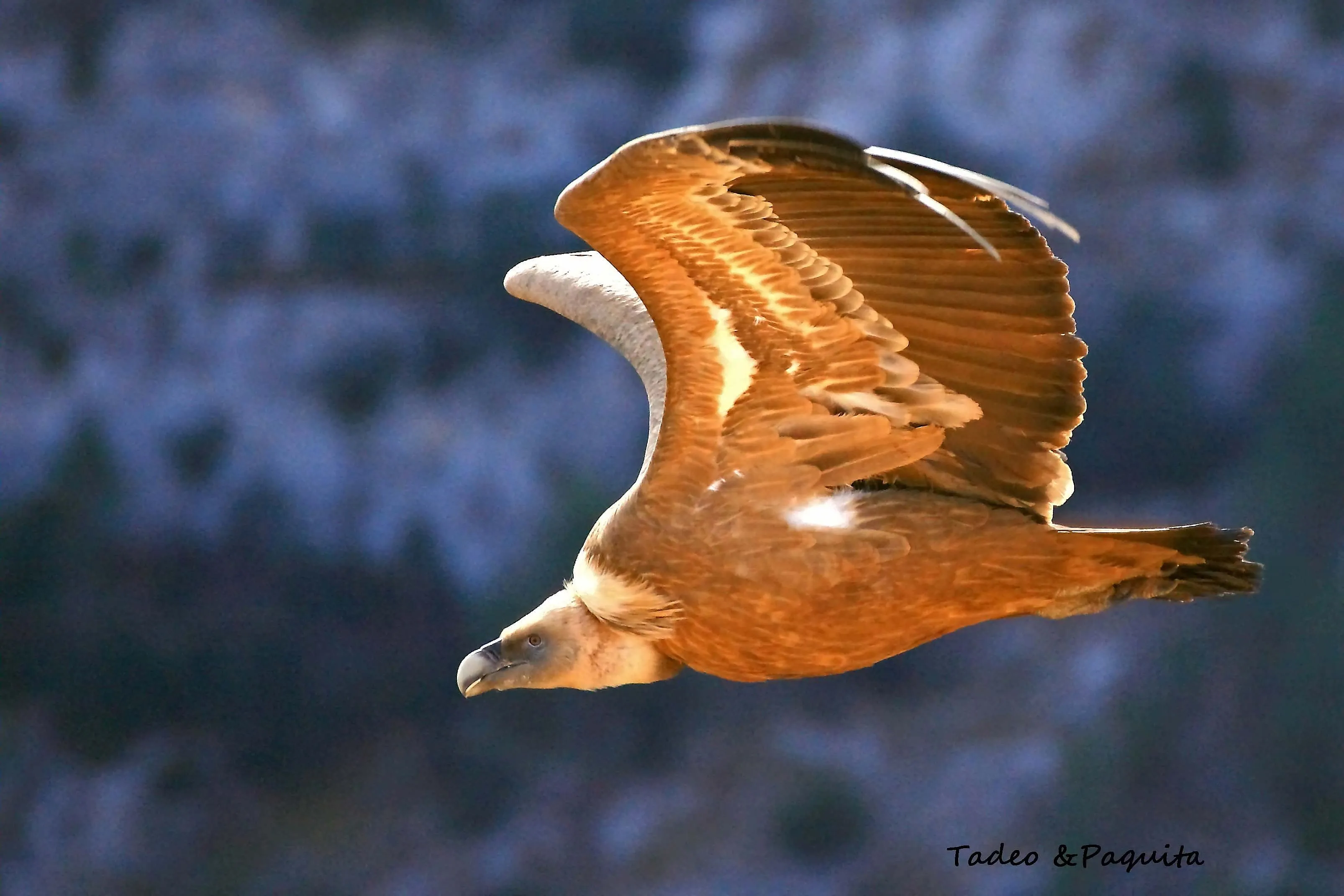
Griffon vulture and peregrine falcon
Several mornings crouched under a camouflage net at the top of the Roca Parda, until they captured the majestic flight of the vultures.
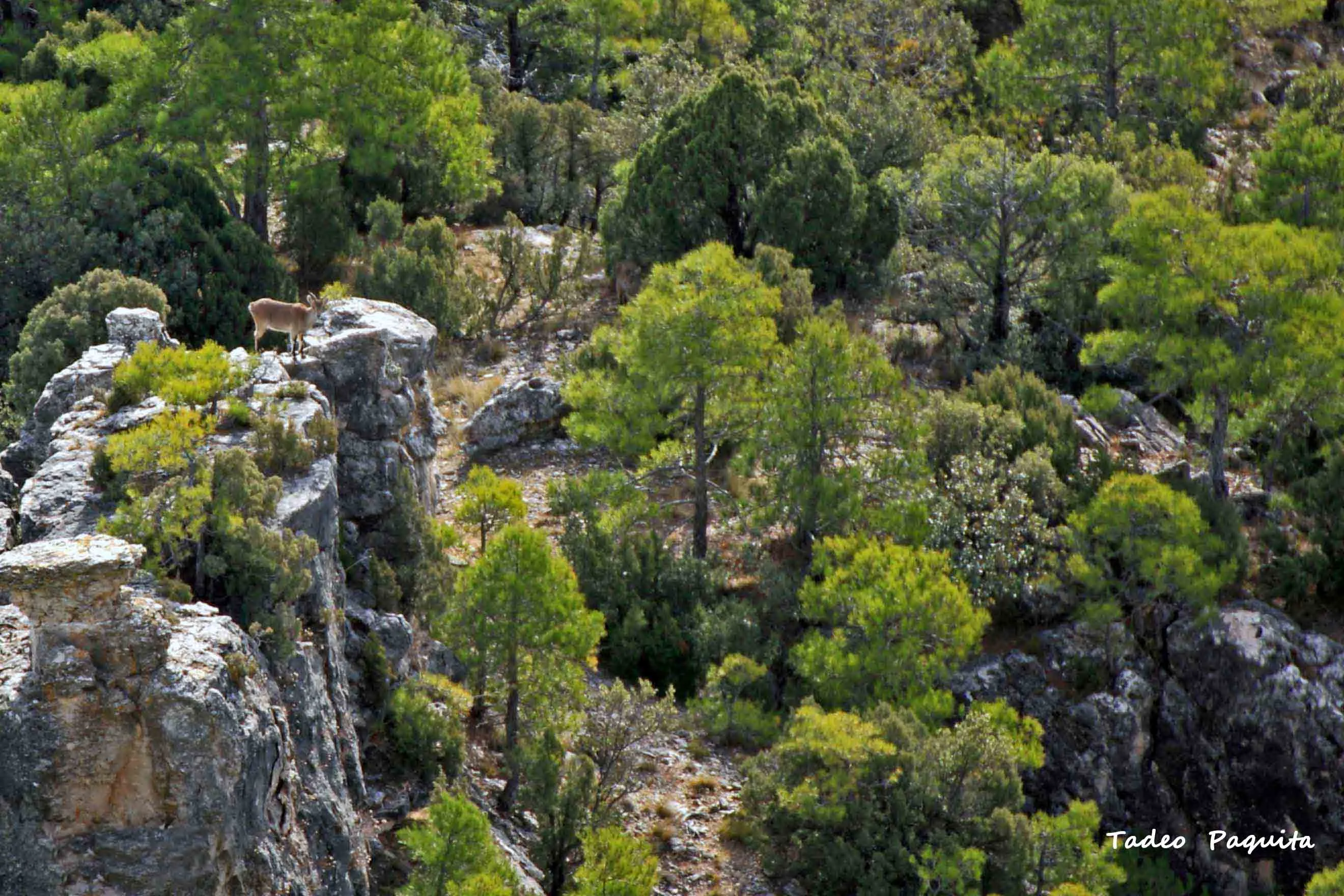
Iberian ibex
Capra pyrenaica
They climb gorges and crags on the edge of the abyss, and when the group is feeding there is always one on watch. At the first sign of danger, they all run.
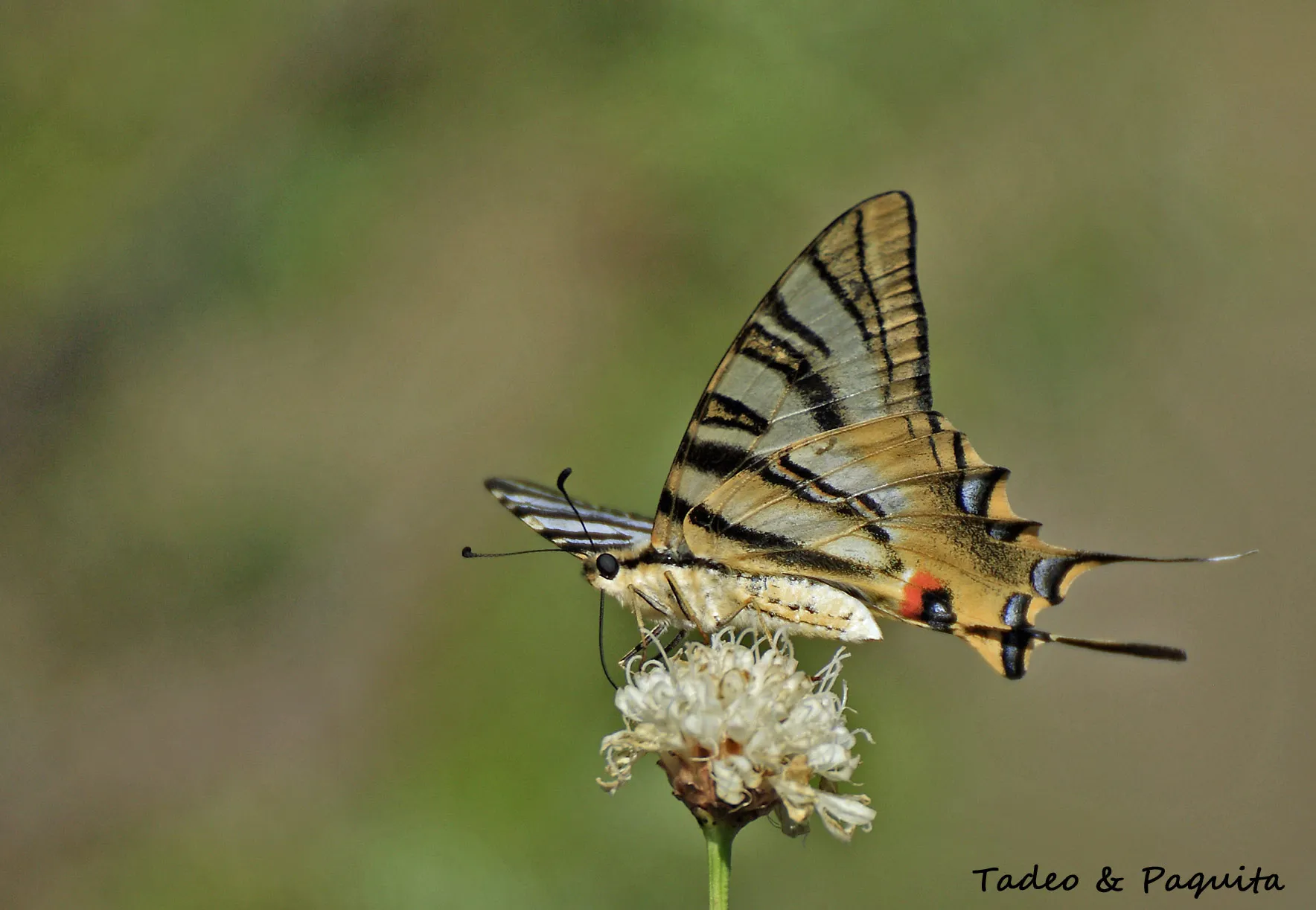
Butterflies
Papallones, palometes
Wings covered in scales and antennae ending in a club. Five families live in the rambla; the nymphalids are the most abundant.