Dragonflies
Odonata
Metallic glints, iridescent wings and a helicopter's flight. They live in the pools the rain leaves in the rambla.
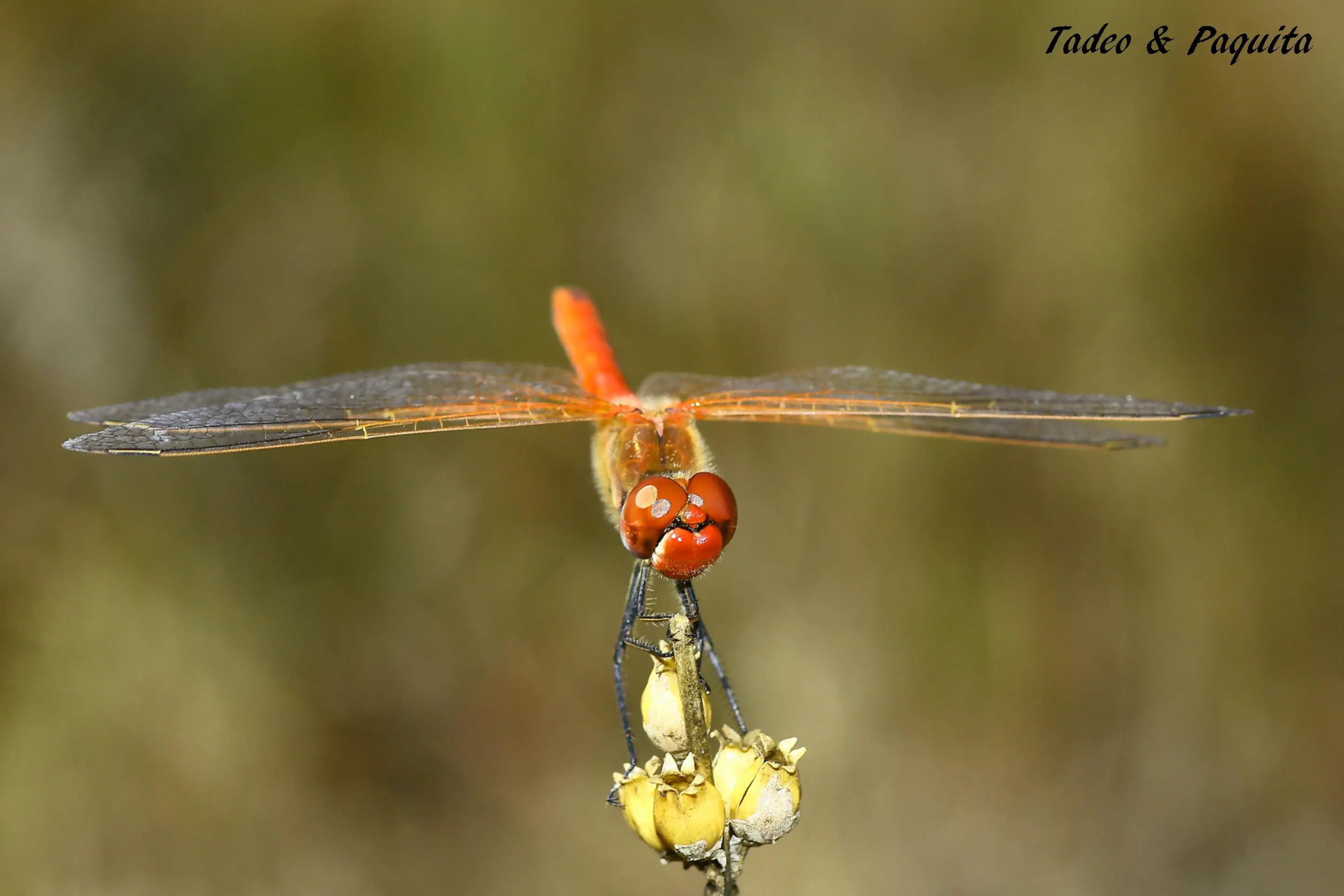
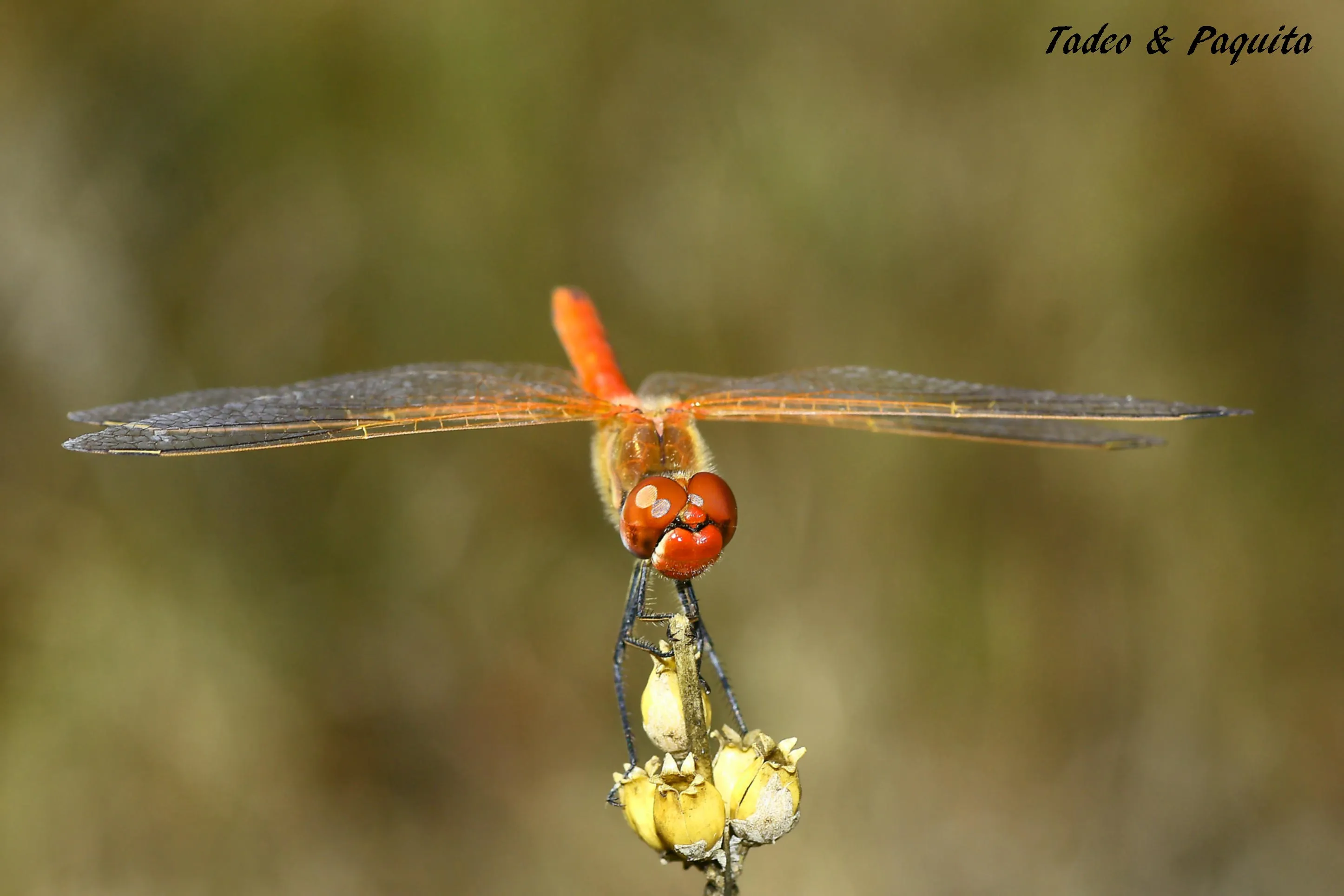
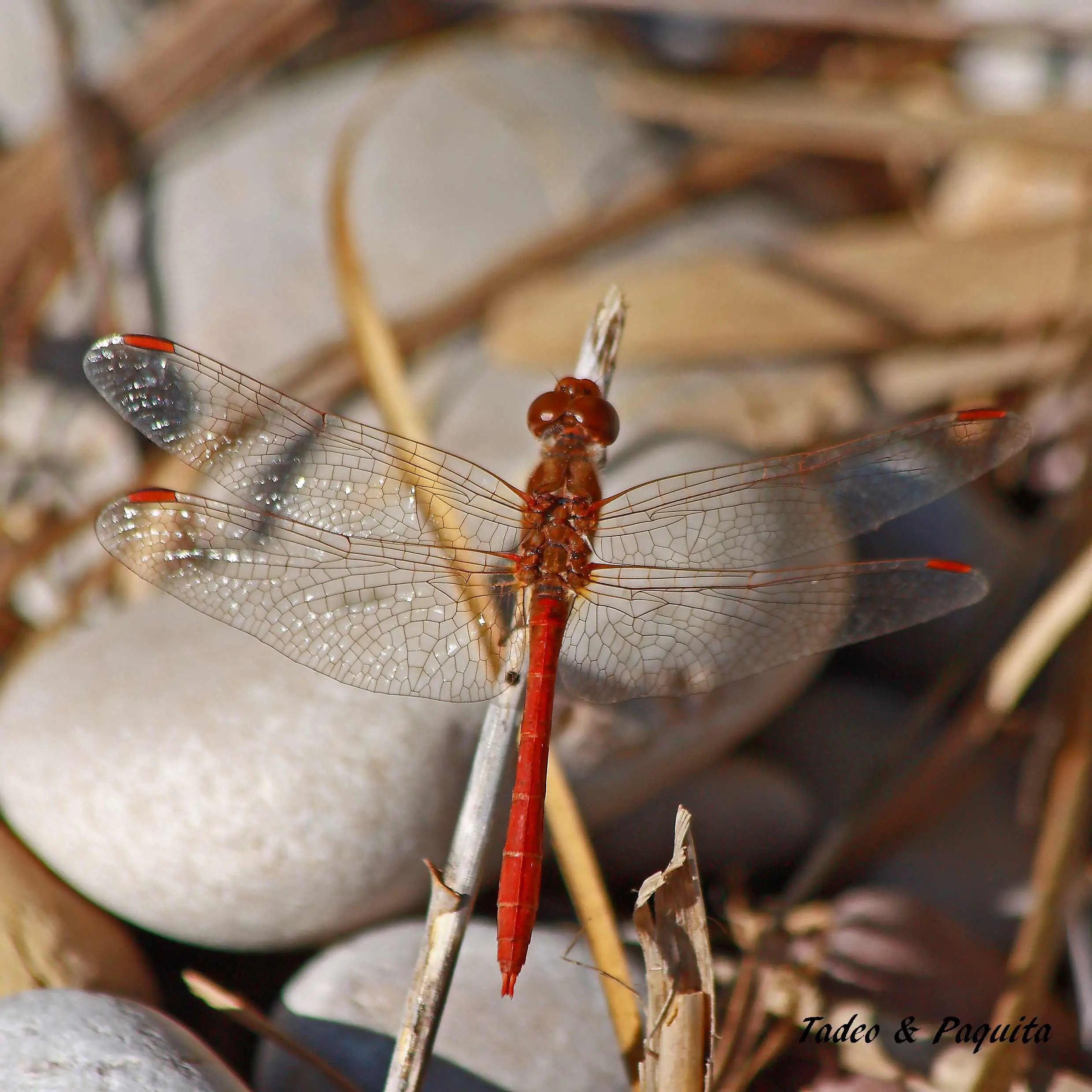
Dragonflies are insects that, in summer, treat us to the splendid metallic glints of their bodies and the delicacy of their iridescent wings. Their natural habitat is near lakes, rivers, pools and marshland; their larvae and nymphs are aquatic. They are large, but because of their flight we confuse them with the smaller damselflies.
Damselflies
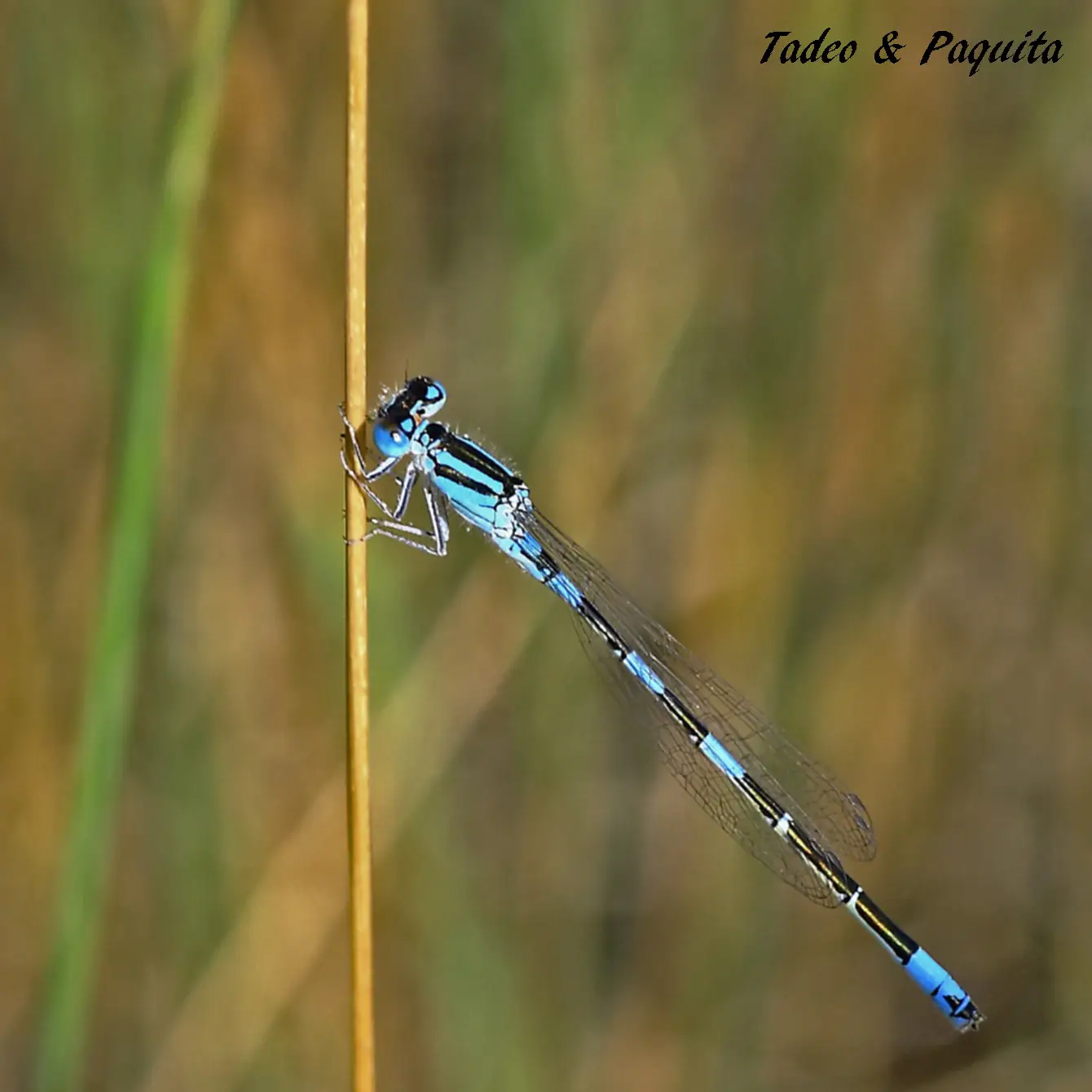
A dragonfly’s forewings are larger than its hindwings; damselflies have both pairs the same size. Dragonflies’ eyes are extraordinarily large, made up of many facets, and tend to spread over the top of the head; those of damselflies look as if they were perched on stalks. At rest, dragonflies hold their wings spread out, while damselflies fold them upright above the perch they are resting on.
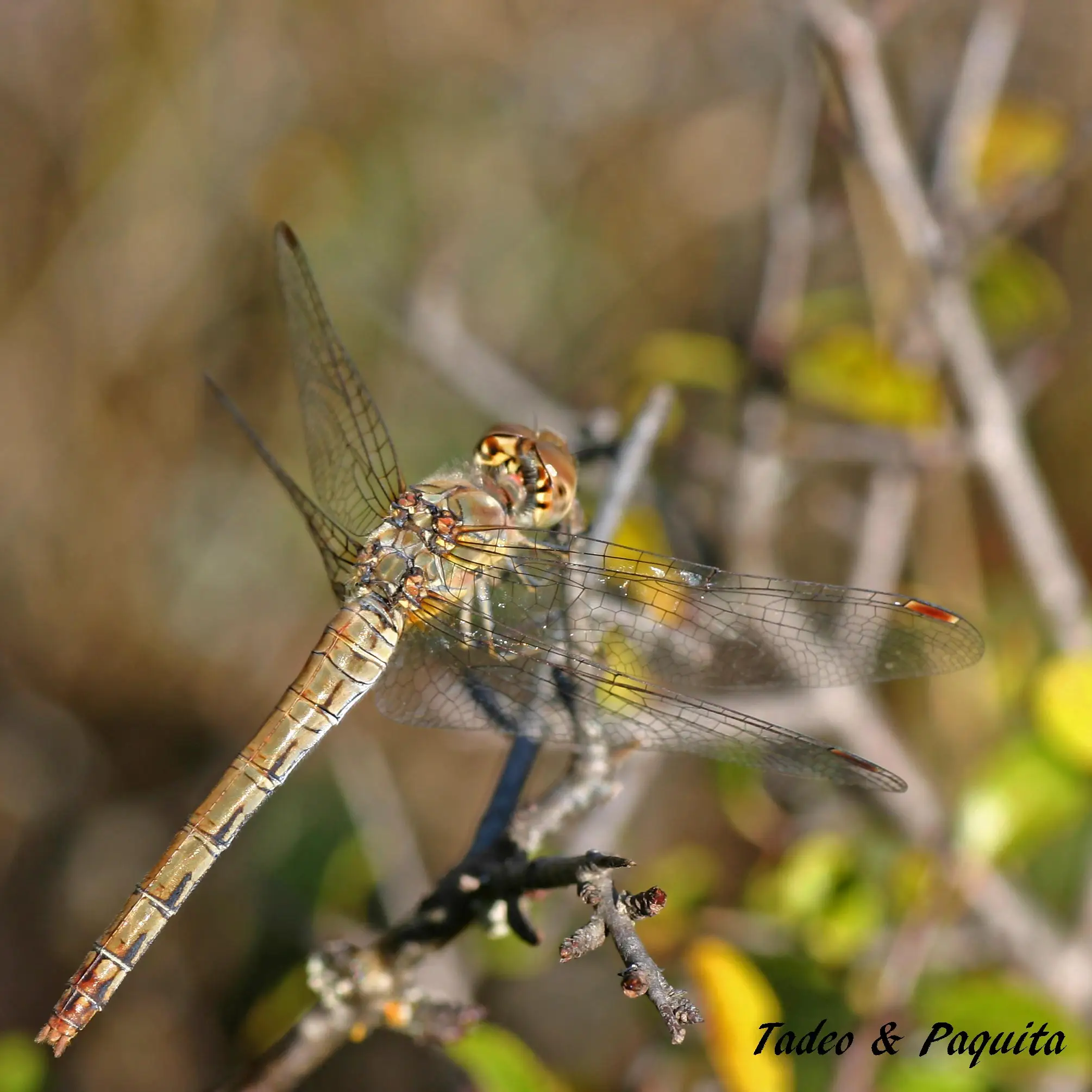
The flight of dragonflies is astonishing: at times like a helicopter, backwards, in a straight line, downwards and sideways, with elegance and grace, like a dancer.
In these insects the nuptial ceremonies are most singular: they look like contests, in which the male always precedes the female and grips her by the back with his claspers.
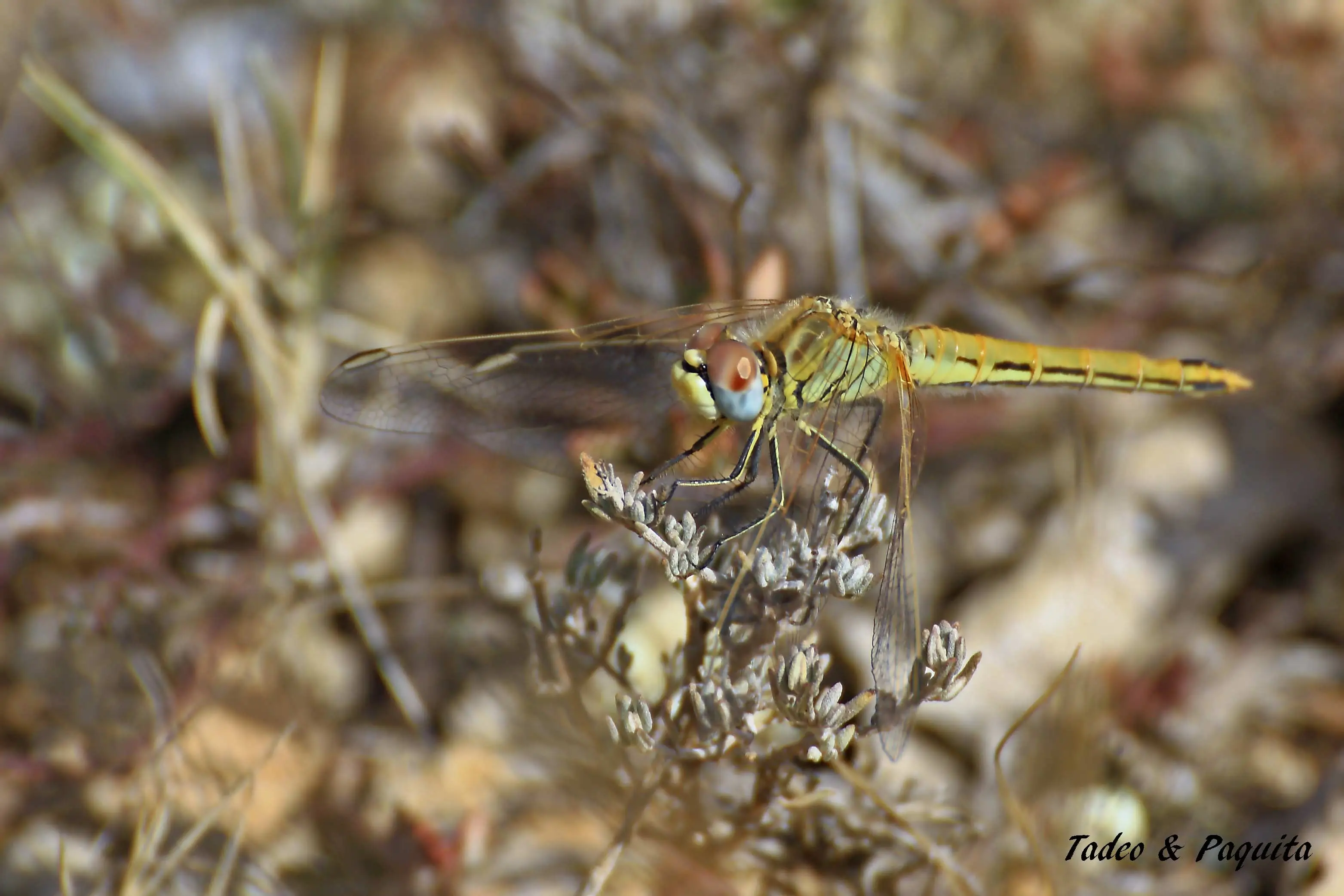
These photographs were taken in the Rambla Celumbres. When heavy rain falls on the Roca Parda and the Roca Roja, the water soon seeps away and feeds the deeper water table, but tolls, pools of standing water, always remain for a few days. In that space the dragonflies live for a while.
Libelloides
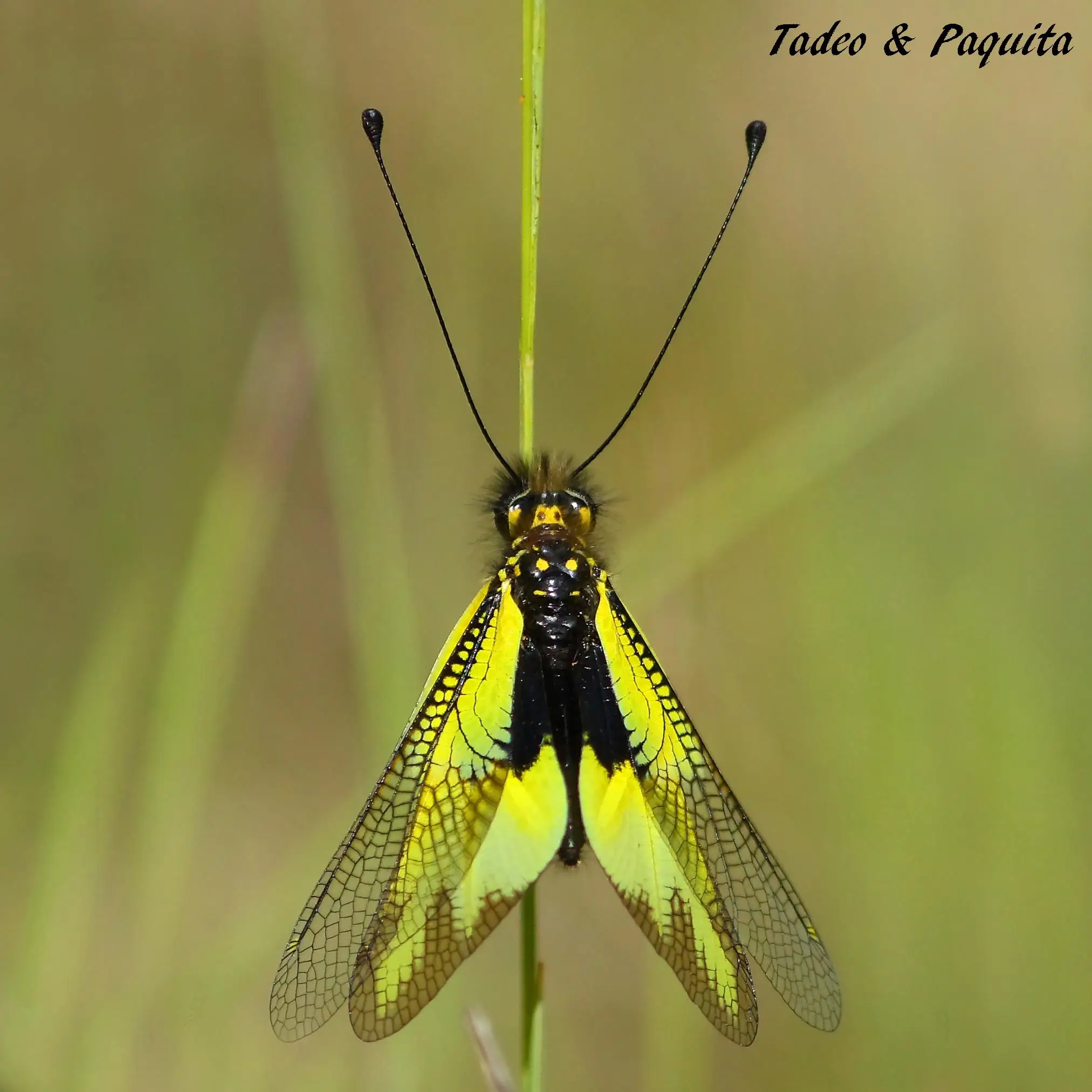
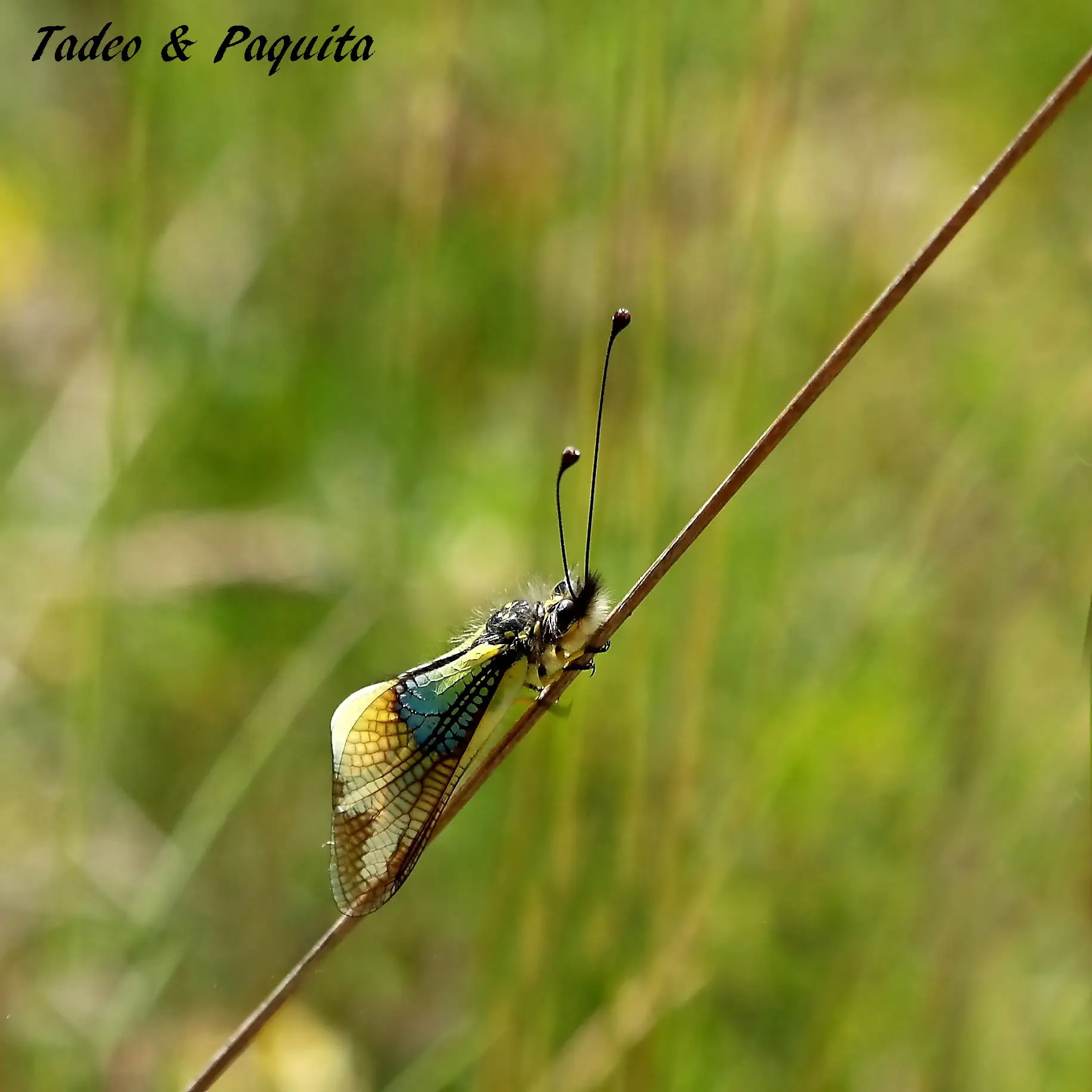
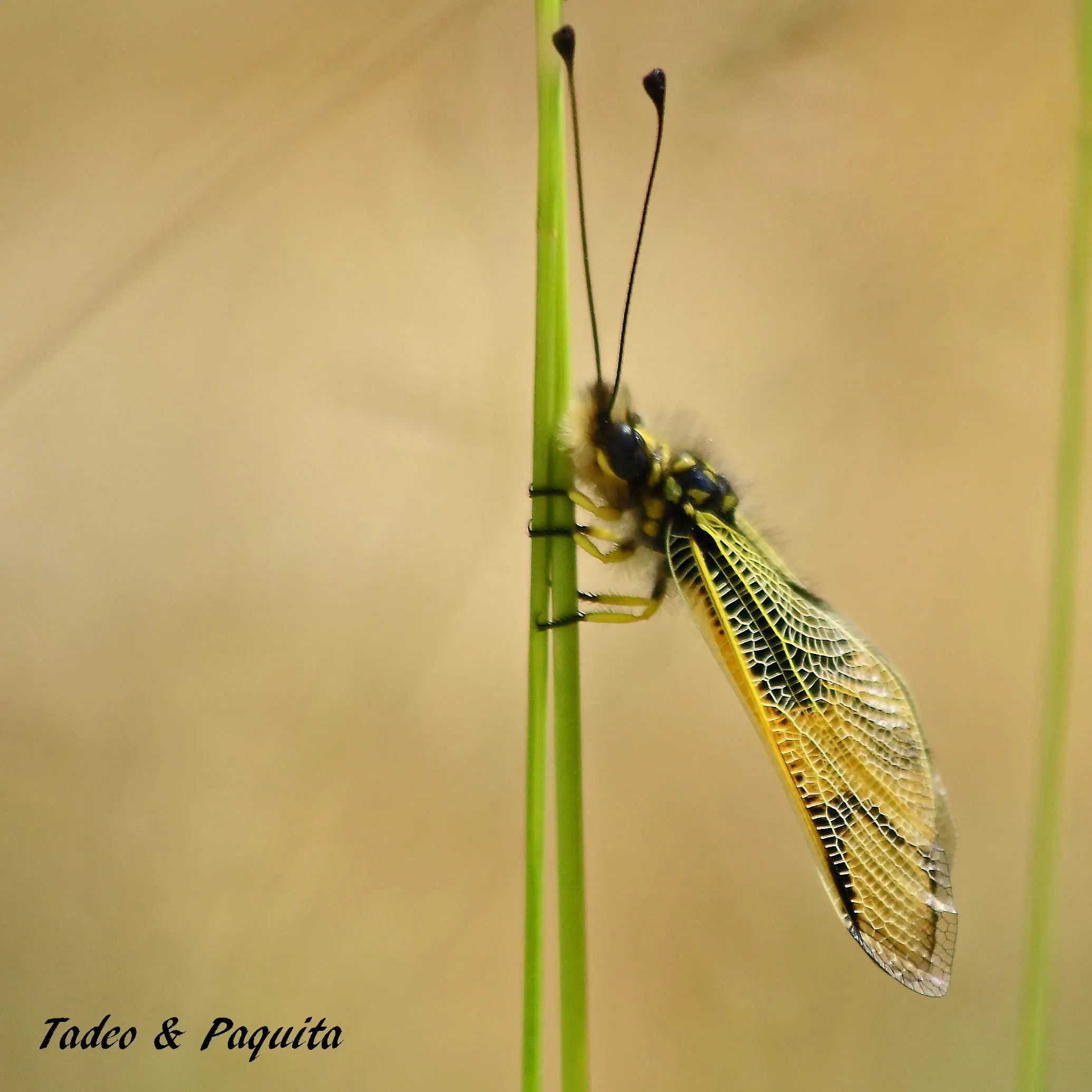
The Libelloides, or owlflies, which look like dragonflies although they are in fact neuropterans, also frequent the rambla.
More in Fauna
See the whole sectionBirds of prey
Griffon vulture and peregrine falcon
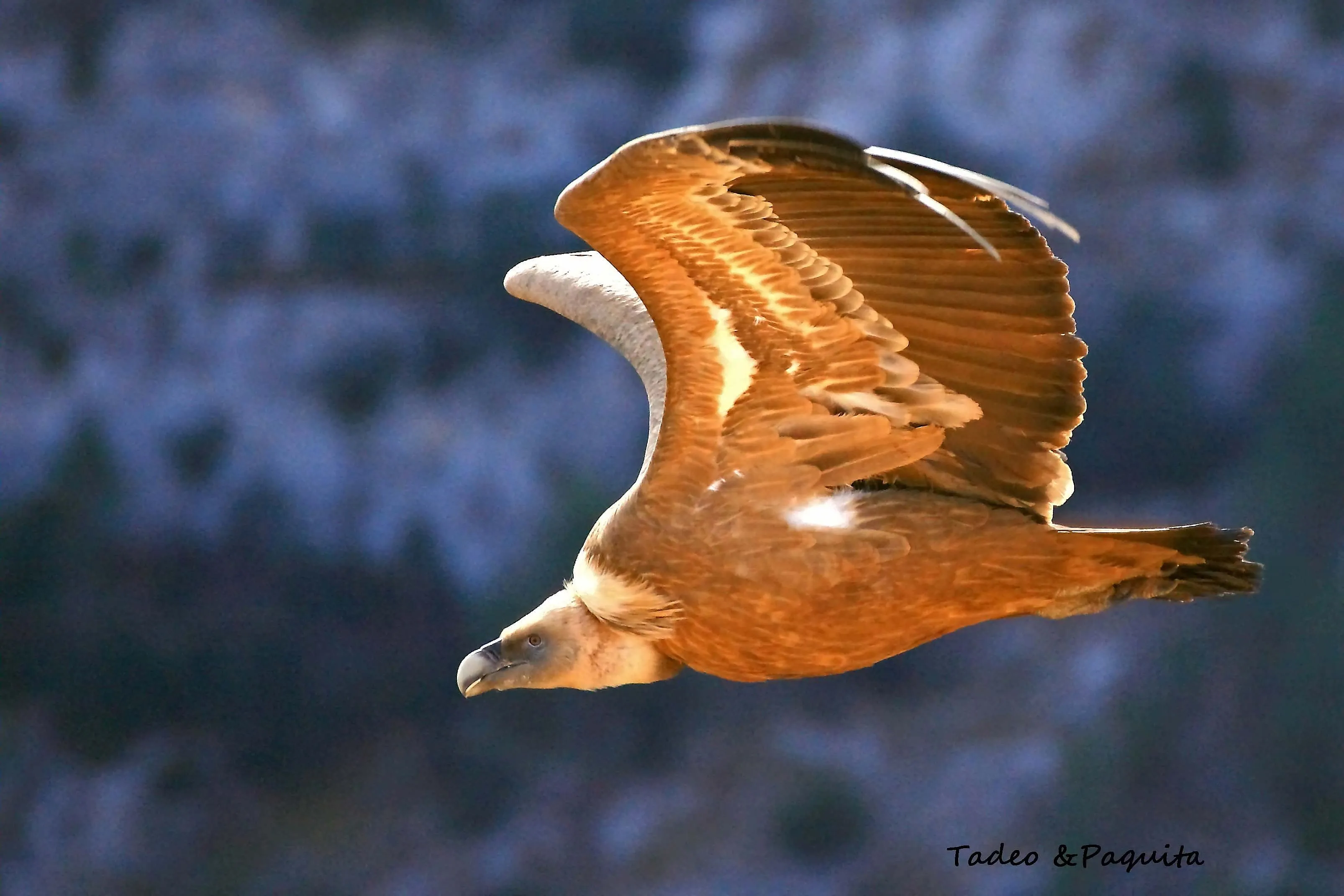
Several mornings crouched under a camouflage net at the top of the Roca Parda, until they captured the majestic flight of the vultures.
Iberian ibex
Capra pyrenaica
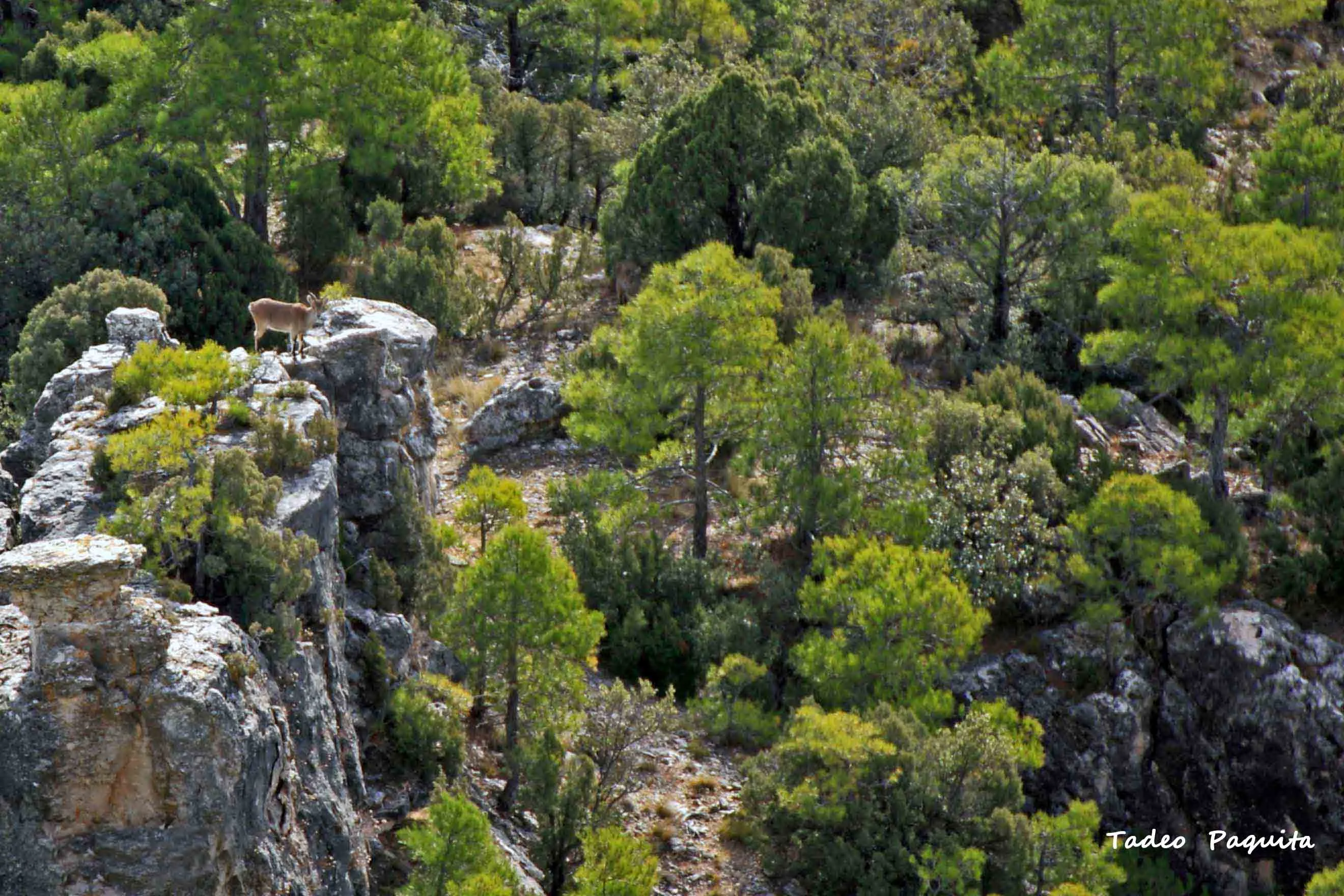
They climb gorges and crags on the edge of the abyss, and when the group is feeding there is always one on watch. At the first sign of danger, they all run.
Butterflies
Papallones, palometes
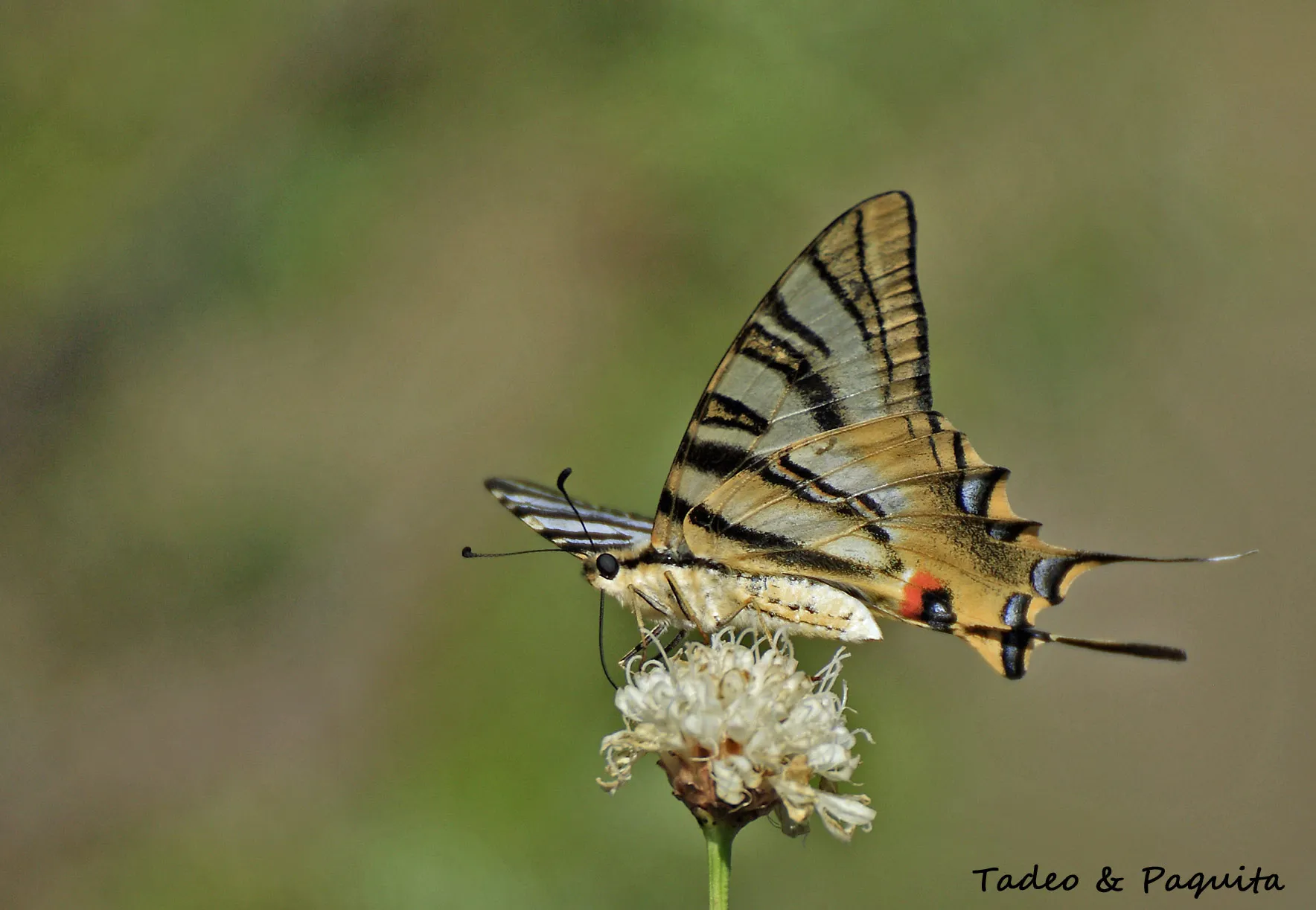
Wings covered in scales and antennae ending in a club. Five families live in the rambla; the nymphalids are the most abundant.